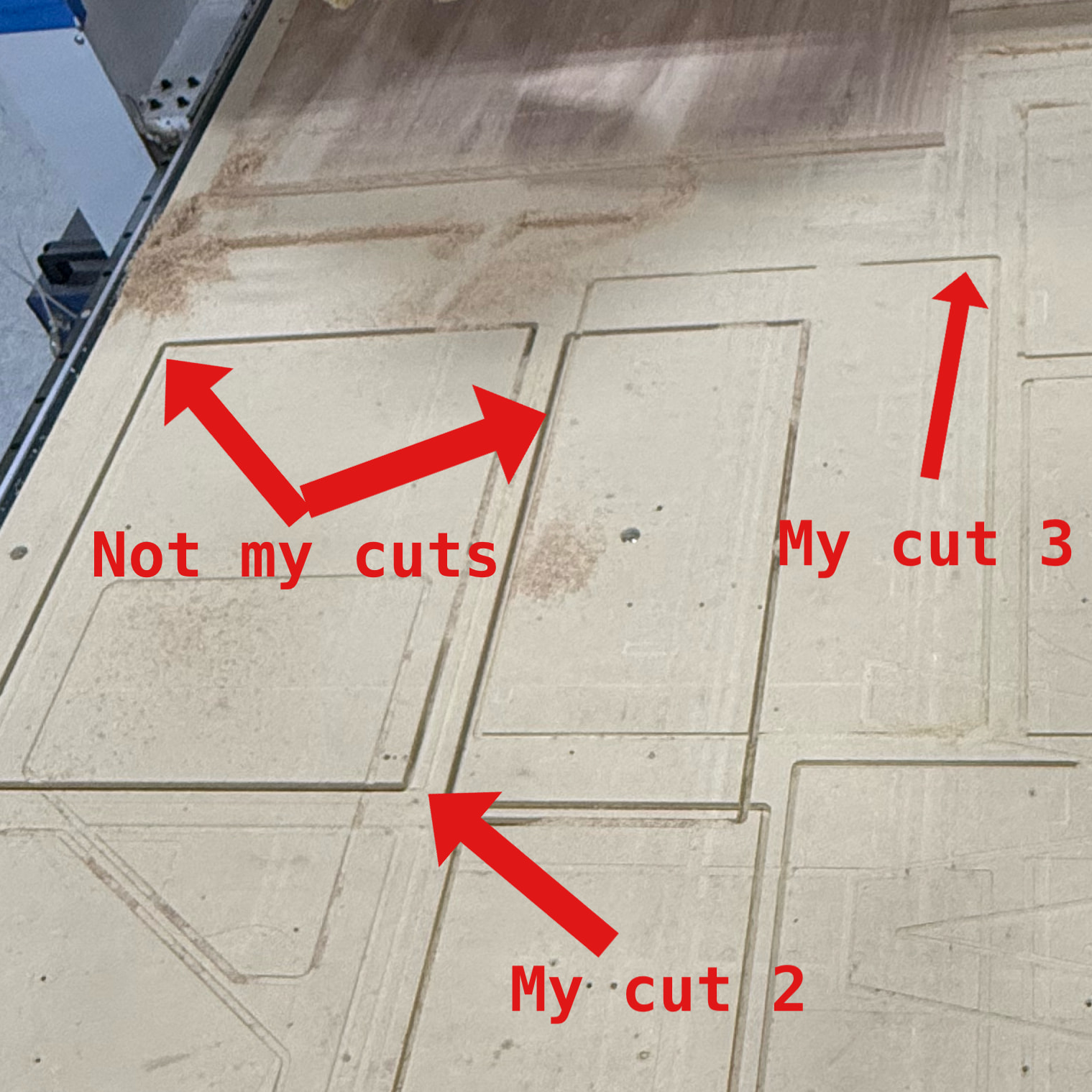
First, if I want to contribute to the cost of purchasing a new spoil board, how would I do that? Tell me how and I’m on it. I’m also happy to be present when it’s installed, although I’m not physically strong enough to be much help getting it on or off.
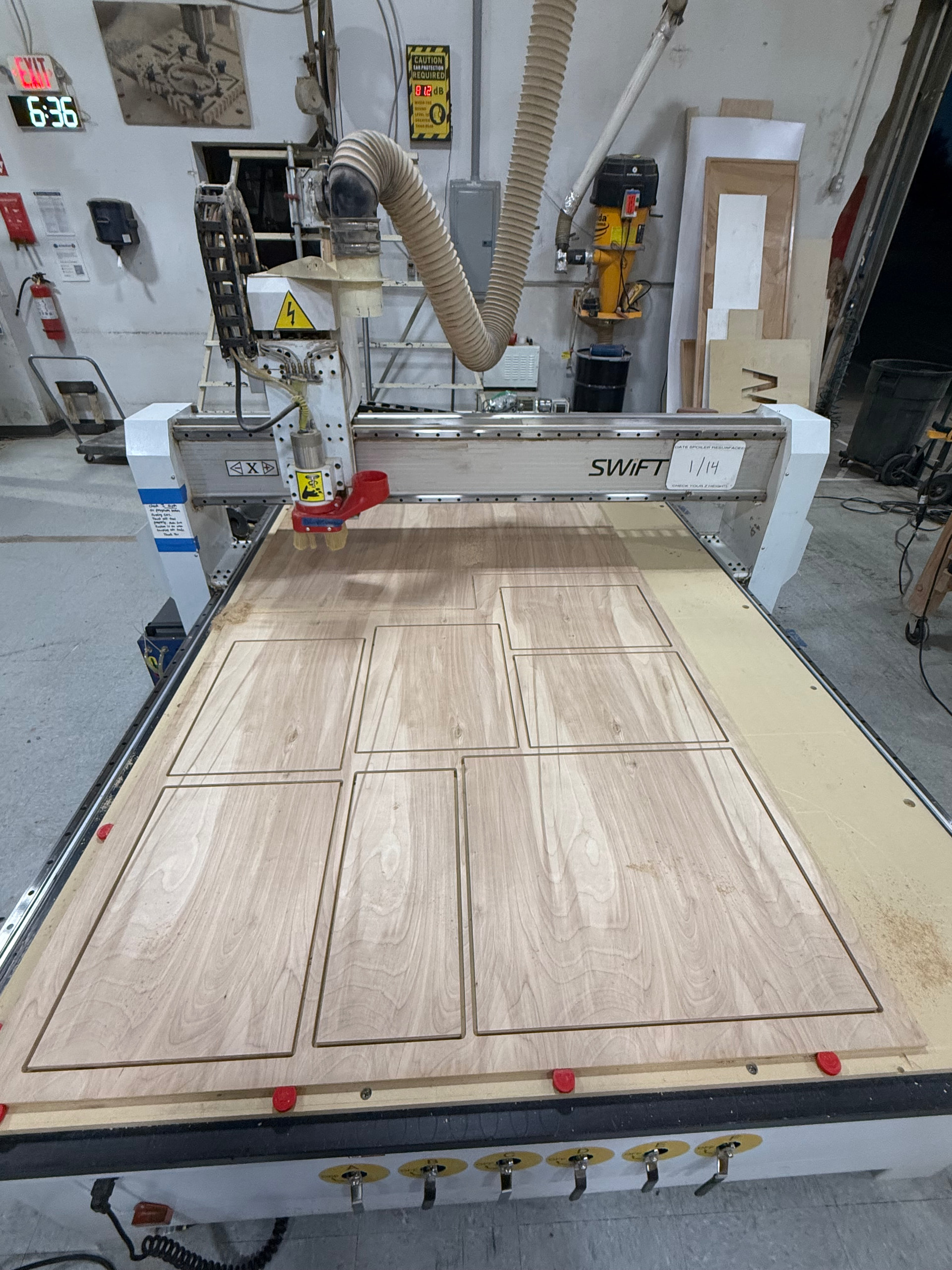
Second, I don’t think there’s something wrong with the big CNC, but I’m also not entirely sure what happened tonight when I used it.
I had one tool path for all of my cuts, except for the last one, which was all the way across the board.
The material calipered at .468 and I set the cut depth to two passes, for a total of .49, just a little over .02 difference.
I was using a spetool compression bit (w2007 I think).
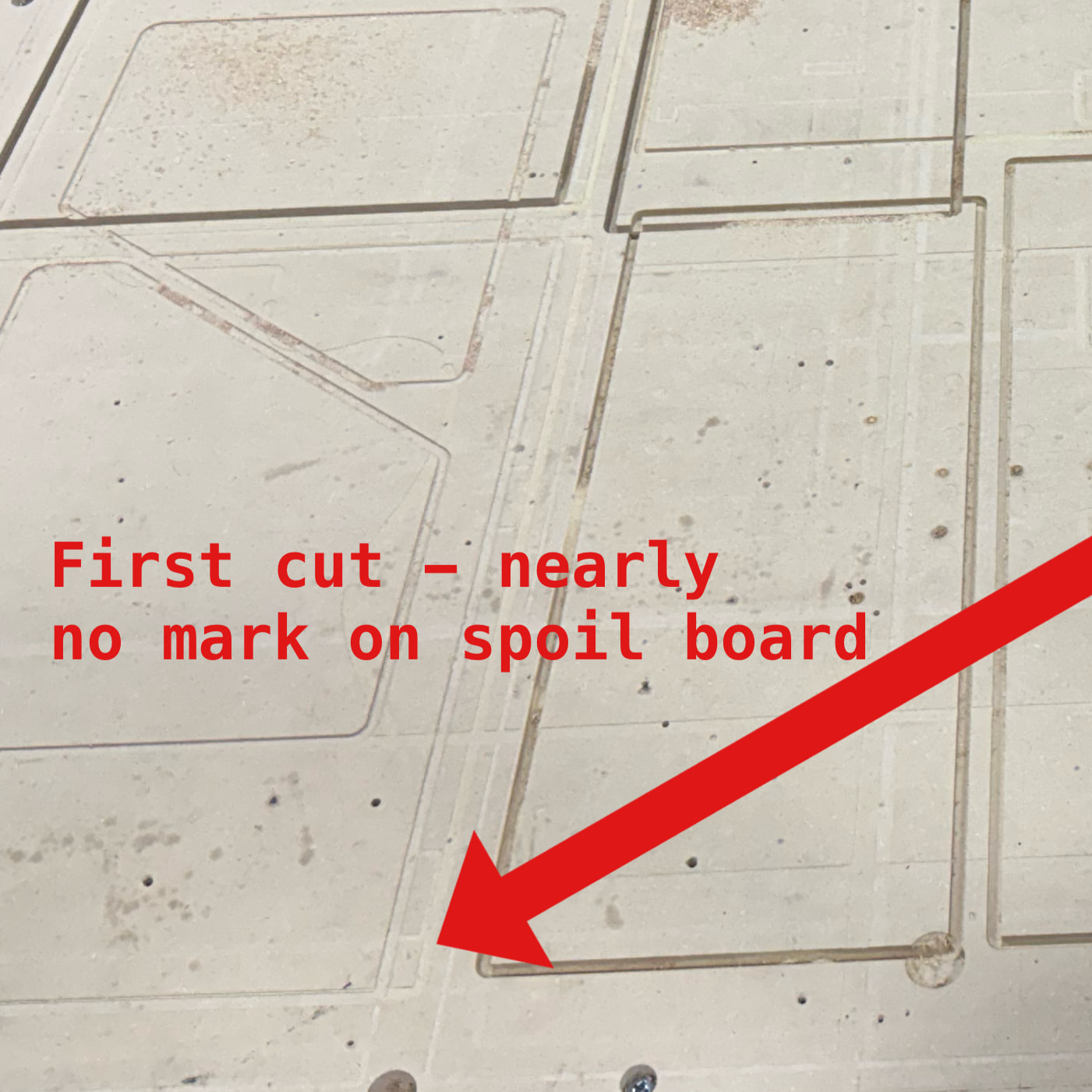
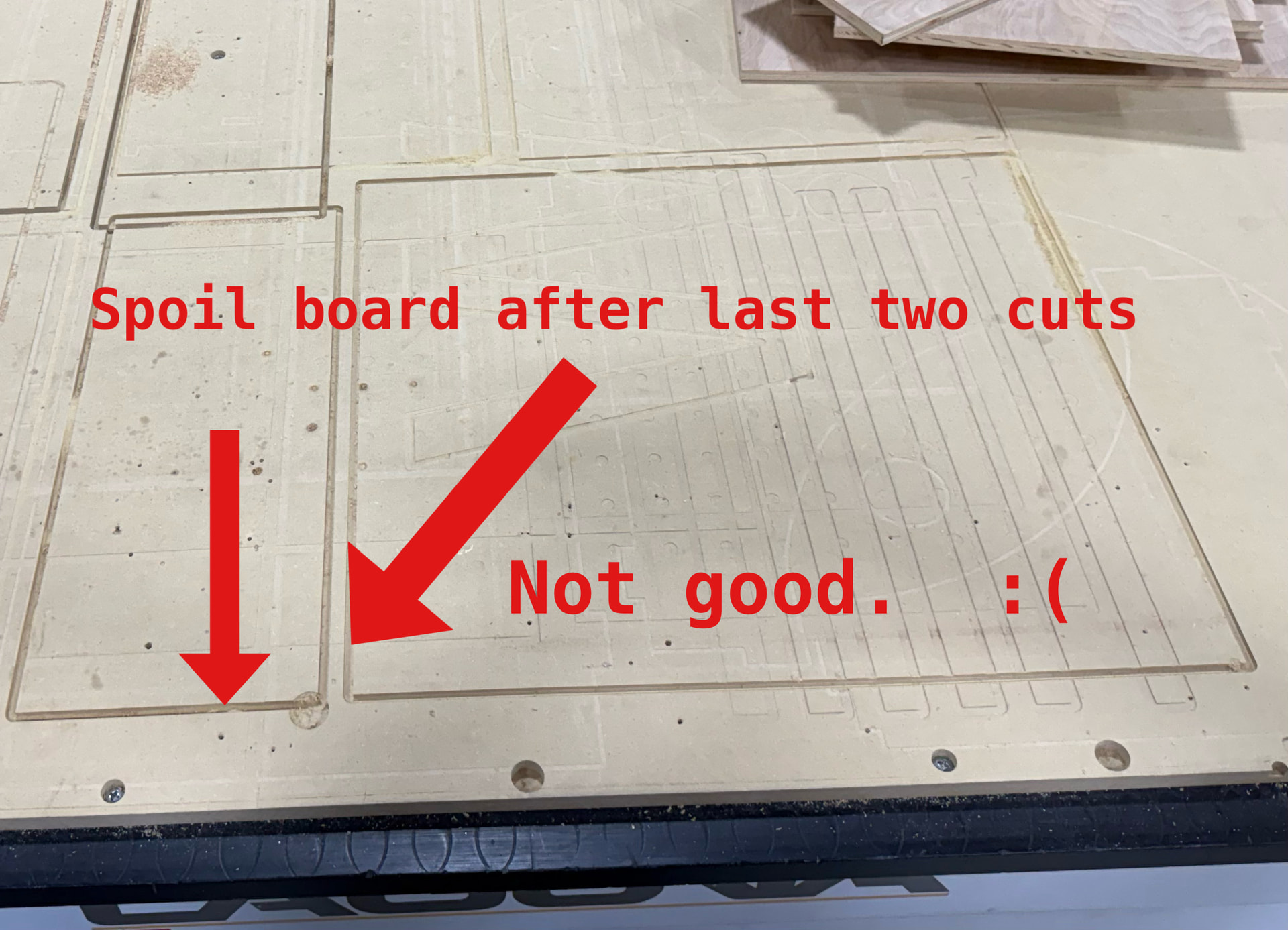
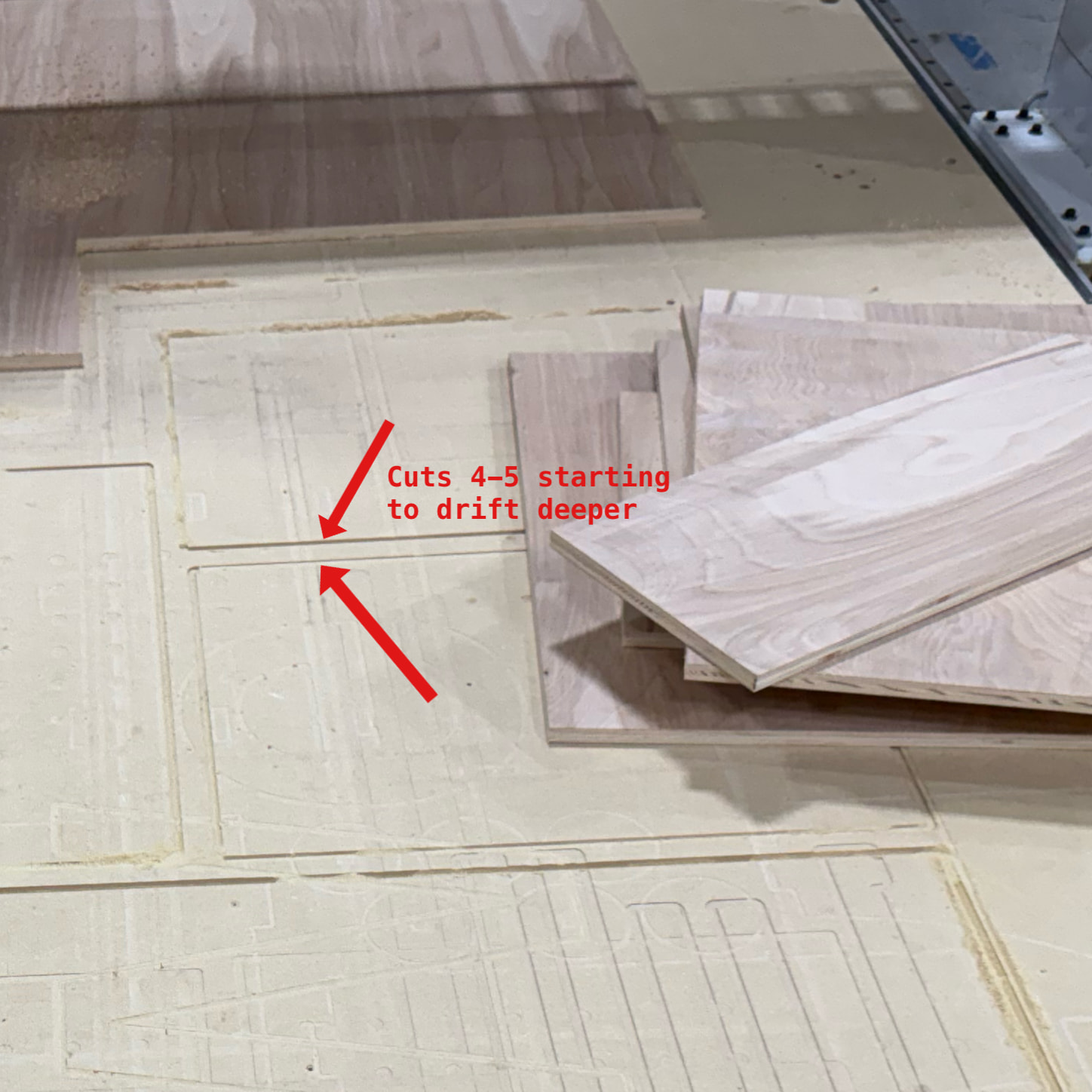
I was there frantically vacuuming because of no dust collector. I didn’t hear anything to indicate the bit had slipped, but when I got the wood off, the first few pieces had cut fine and then I could see the gradual depth increase into the spoil board across the rest of the cuts.
Best as I can guess, I didn’t tighten the bit down enough and it gradually vibrated loose? I took the bit off before I’d moved the wood off, so I didn’t look to see if it was lower than when I put it on.
Any other ideas on what I did wrong or what went wrong?
Thank you for any lessons I’m about to learn from making this mistake.
Also? Shout out to @bwatt who helped me talk it through and try to figure it out.
Thank you for your honesty and willingness to help! Mistakes happen and not everyone has the courage to stand up and say “Well… shucks, I did it.” Even if it was a potential bit slip or other cause.
How much does a new board typically cost? I know there is also the cost of people’s time and I feel quite badly about that. Maybe I will be able to contribute my own time back to them in some kind of useful way in the future. Thx for sharing what it takes to replace one. I knew it was quite a bit of work.
It’s about $85 for a sheet of 5x10 MDF. It might vary a little bit from time to time and depending on where it comes from, most the time we get it. From, Dakota hardwoods.
Yeah - i’m about to try the CNC for the first time solo.
as such, i’m going to use a pegboard as a buffer until i’m sure i won’t hose it up for others. If it gets ruined that frequently, perhaps that should simply be a requirement for new people.
Number one tip that has yet to fail me is using “bottom of stock” as your Z. This is much safer because it eliminates the error that can occur when measuring the material itself and also the possibility of typing that number incorrectly in V-carve or fusion.
When I took the class I think we were taught top of material right? I need to think through this. This might be very useful for preventing all the spoil board damage!
William, you can put pegboard under there, but I’m not sure the vacuum will work as well for holding the material down.
Thx Eric. Definitely going to think about reversing my thinking on this!
Indeed - i’ll let you know how the pegboard works.
just booked monday between 3-5p.
Granted, i cancel my bookings a lot because work is randomly busy — as of now — i’m free though.
@EricP can you explain more? i learned in the intro class to calculate the width of the material at the four corners, taking the largest value, defining that as my z, then setting the depth of cut to be “z + 0.05 inches” … if that’s an old idea, i’d love to learn more. thanks.
Using the machine bed as your reference is almost always better because it is a fixed machined reference point.
If you pick the top surface, you have about 3-4 things that can go wrong.
-You can measure wrong with the calipers (this is very easy to do especially with the cheap calipers at the CNC station.)
-the material itself can have large variation in it.
-you can type that value wrong in v-carve.
- the failure cost of messing up any of that is cutting deep into the spoil board., It’s just not a good method to use on a machine where so many people are learning for the first time.
Using the machine bed method almost completely eliminates the risk of spoil board damage from all of the above because even if you do something wrong your file is not going to go deeper than the bed. It might smash and break the bit in your material but it’s not going to mess up the bed of the machine..
Don’t get me wrong there are some use cases for using top of stock but 90% of everything people do on the CNC which is mostly sheet goods the bottom method is superior. Everyone that does any serious production work on the CNC Router uses the bottom method.
A couple notes on using this method:
You want the vacuum turned on when setting your tool height. the spoil board is cut with the vacuum on so it will be as flat as possible with it turned on. Also the vacuum pressure is so great it squishes the spoil board about. 028” when on, so if you do it with it off then turn it on you won’t cut all the way through your material.
So in the class they said cut .05” deeper than your material thickness? that is way too deep.
I only cut .-005- .008” deeper than the base, you can barely see it once it is cut.
Let me know if you guys have any questions, if anyone wants to leave a file on the CNC computer I can do a quick review, and we can just leave for peoples’ reference.
I went back and looked at my notes, and it was 0.01 NOT 0.05. that was me misremembering, but to your point, that kind of mistake might hammer the board. I’ve only ever done one project on the big CNC (and didn’t spoil the spoil board, #humblebrag), but i’ll try out the bottom of stock method using the smaller CNC for my next project. looking forward to it.
I strongly agree with Eric about using the bed as your reference point. This is particularly true if most/all of your cuts are through cuts. The only time using the material surface as the reference is an advantage is if you have features that only cut partway through and if the depth of those features is critical.
I always set my through cut depth as ‘z’ in VCarve, not ‘z + (something)’. Sometimes that means I have to break a super-thin remnant and clean up the edge, but the edge usually needs attention anyway so it hardly matters.
I ruined a spoil board on the 24th of January or so. Maybe right before that…because the bit came loose and started dropping a little at a time across the rest of the project (I paid for the spoil board, although that doesn’t account for people’s time and I’m sorry about that). However. It wasn’t a wrong z value.
So if I had the material starting at the bed as 0 for z index and that same thing happened, would the outcome have been different? Better or worse?
Sorry if the question’s stupid, but I’m trying to wrap my head around switching the starting point of z and understanding the impact in various situations.
Thx for the conversation. It’s helpful to hear various opinions and think this through. I want to make a lot of use of the CNC, but I don’t want to ruin that board.