Howdy Potters,
I wanted to share some guidance on layering our dipping glazes, specifically White Gloss, Black Gloss, and the Floating family (Floating Blue and its relatives).
The issue: When one of the Floating glazes is applied over White Gloss or Black Gloss, you can end up with streaking where the top glaze runs and leaves bare or barely-covered patches underneath; most noticeably at rims and shoulders.
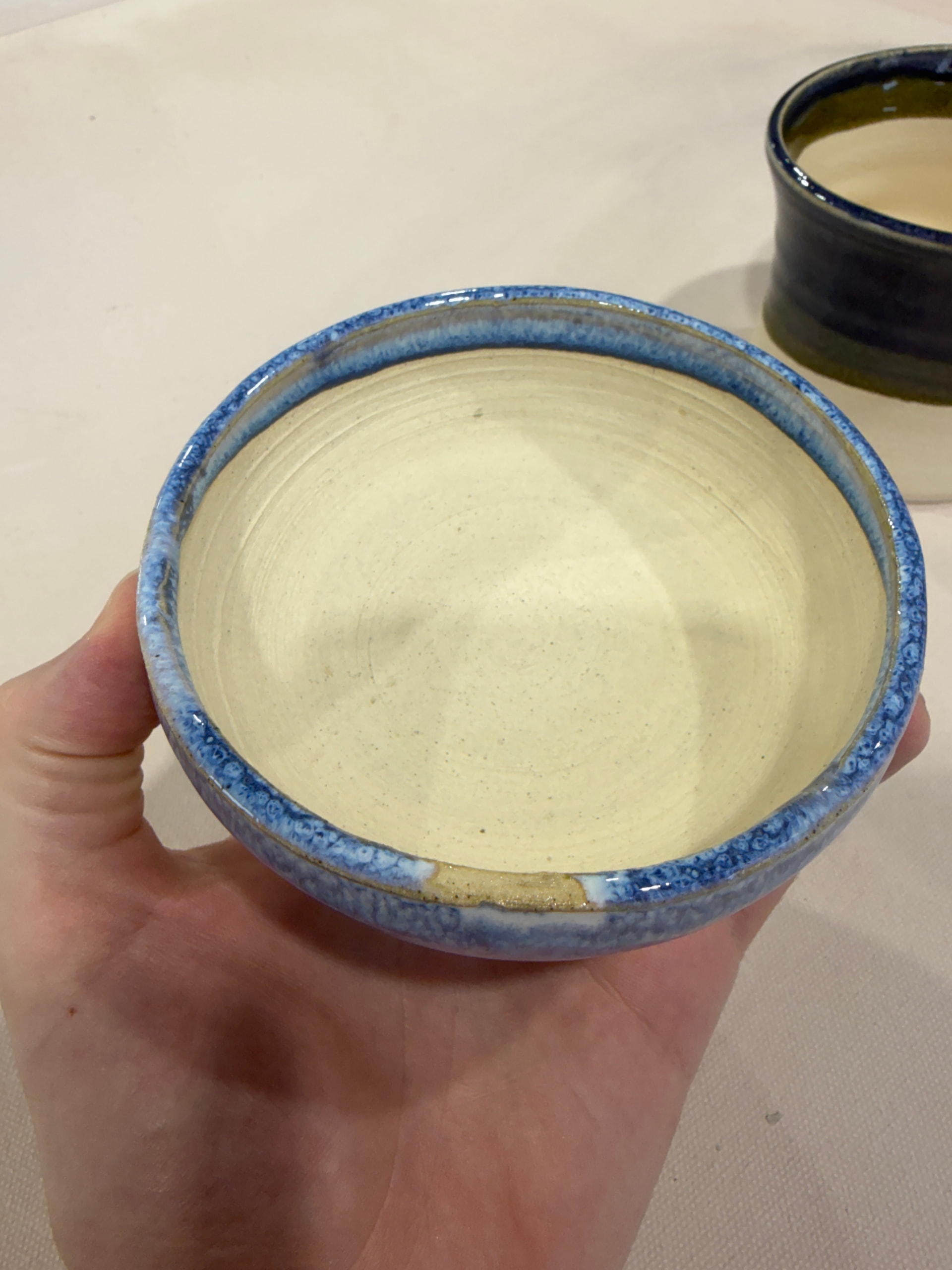
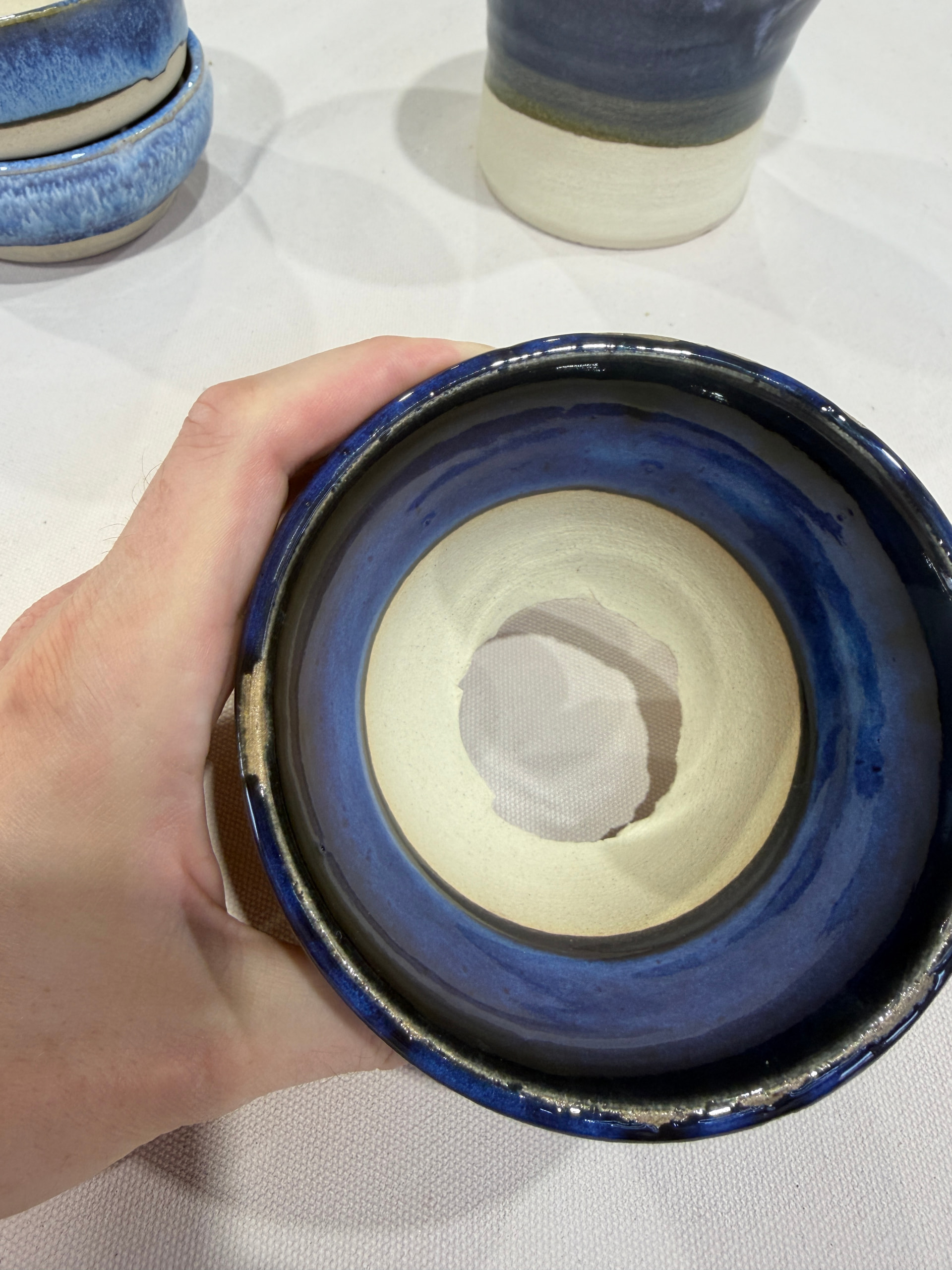
The fix: Flip the order. Put White Gloss or Black Gloss on the outside (the last coat you dip), and put the Floating glaze underneath it as your base coat. Layered this way, the two glazes behave much better.
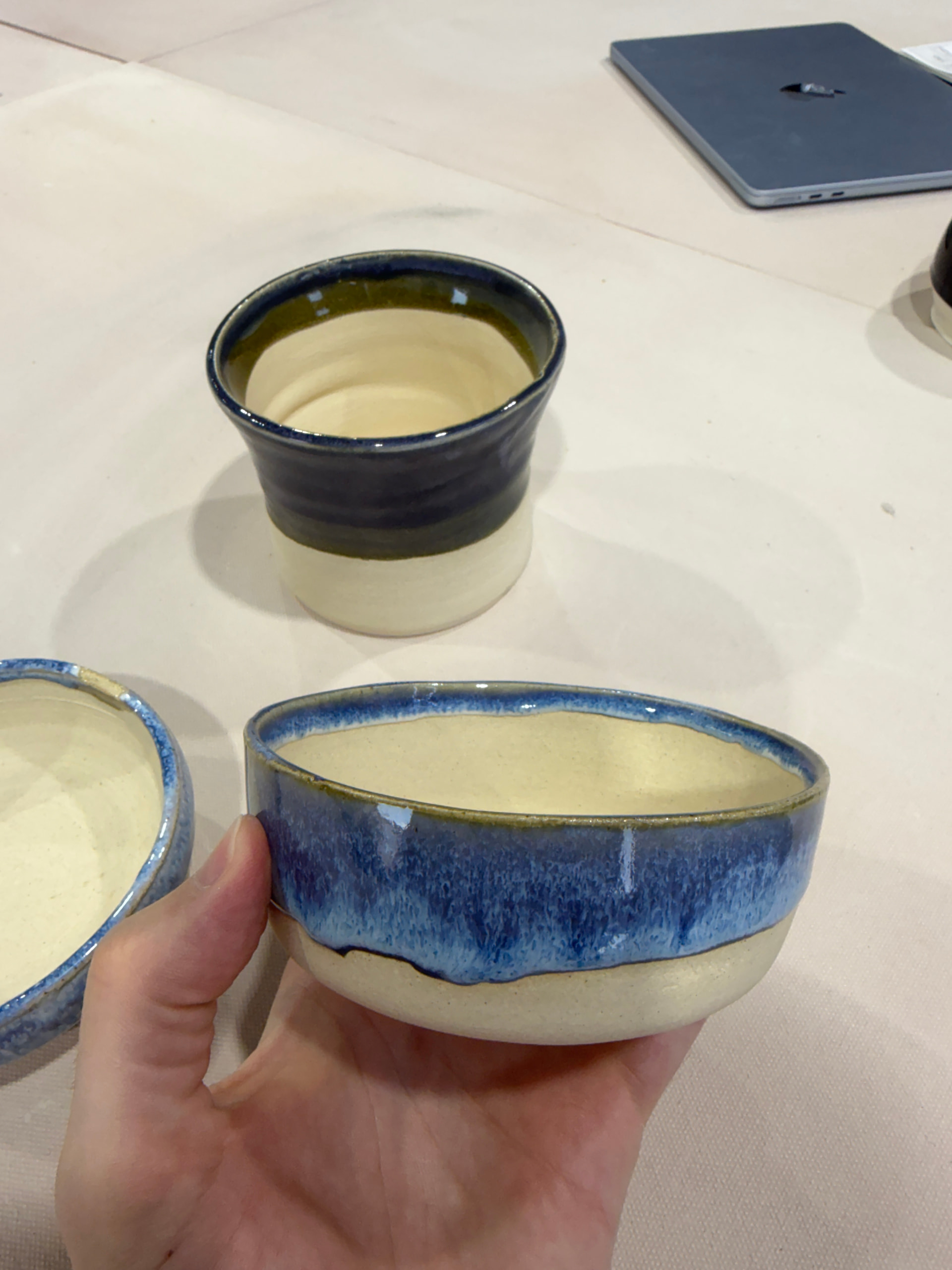
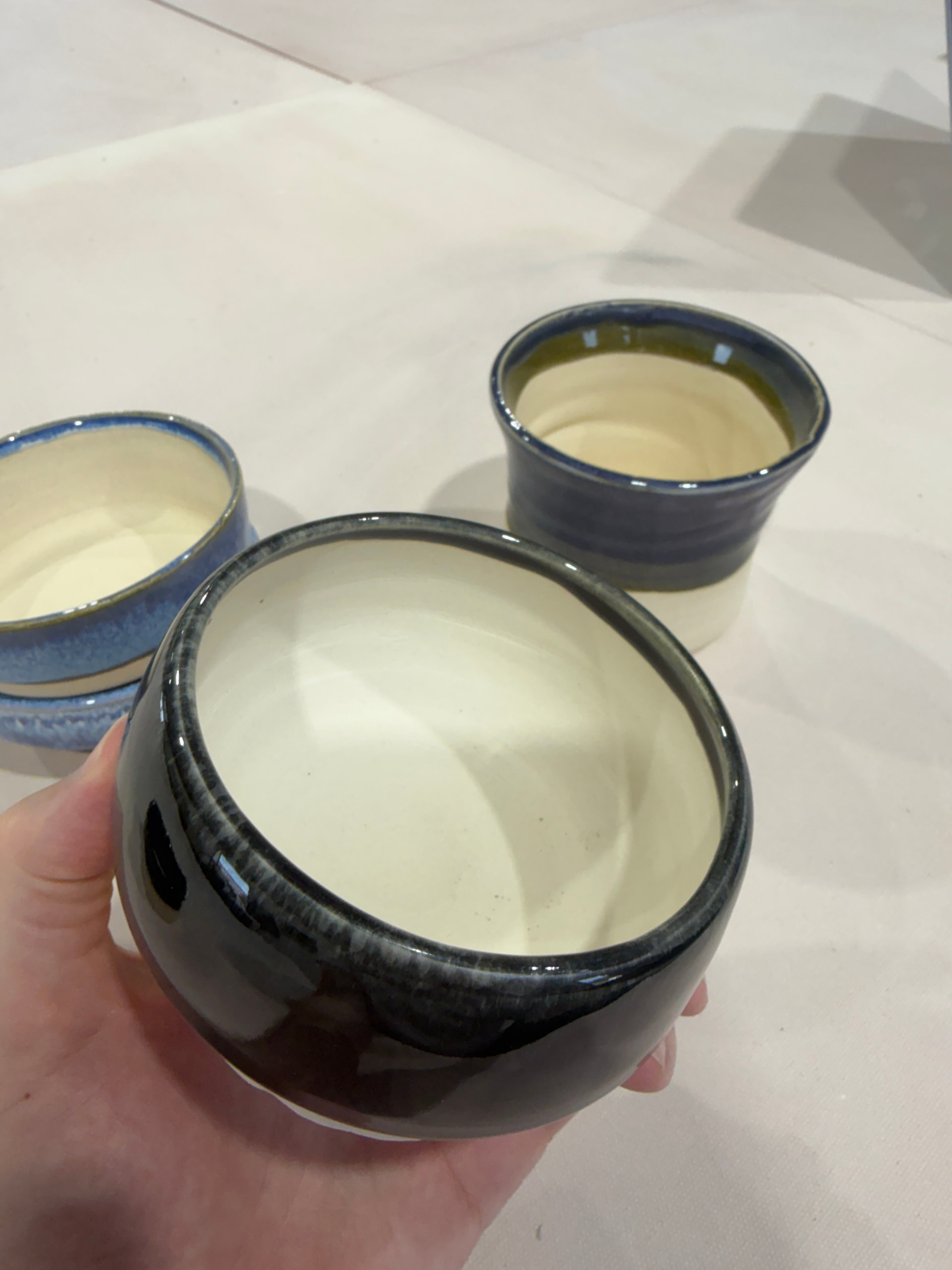
Why (I think) this happens:
White Gloss and Black Gloss are formulated to melt in a stable, predictable way. The Floating glazes are formulated to be a lot more fluid and reactive — that’s exactly what gives Floating Blue its variegated, “floating” look, but it also means it wants to move a lot more during the firing.
Whichever glaze ends up on the outside is the one that’s free to move. The inner layer gets held in place by the weight of whatever’s sitting on top of it.
- Floating on top: the runnier glaze is exposed with nothing holding it down, so it slides and rims/shoulders take the worst of it, since those are already the thinnest-coated spots on any dipped piece.
- Gloss on top: the more stable glaze becomes the outer layer and acts almost like a lid, holding the Floating glaze in place underneath. Instead of sliding off, it breaks through texture and thin spots in the Gloss coat.
Practical tips while layering:
- Dry time between coats matters. Let the base coat go fully matte and cool to the touch before dipping the next layer. Floating glazes are slow to dry all the way through, so give them a little extra time.
- Watch coverage at rims and shoulders. If you want even coverage there, consider a second quick dip on just that area for your base coat.
Want a white base layer instead? Since White Gloss isn’t the right pick if you want white showing underneath a Floating glaze, use Ivory instead. Ivory is similarly formulated to the Floating family and interacts well with all of those glazes as a base layer.