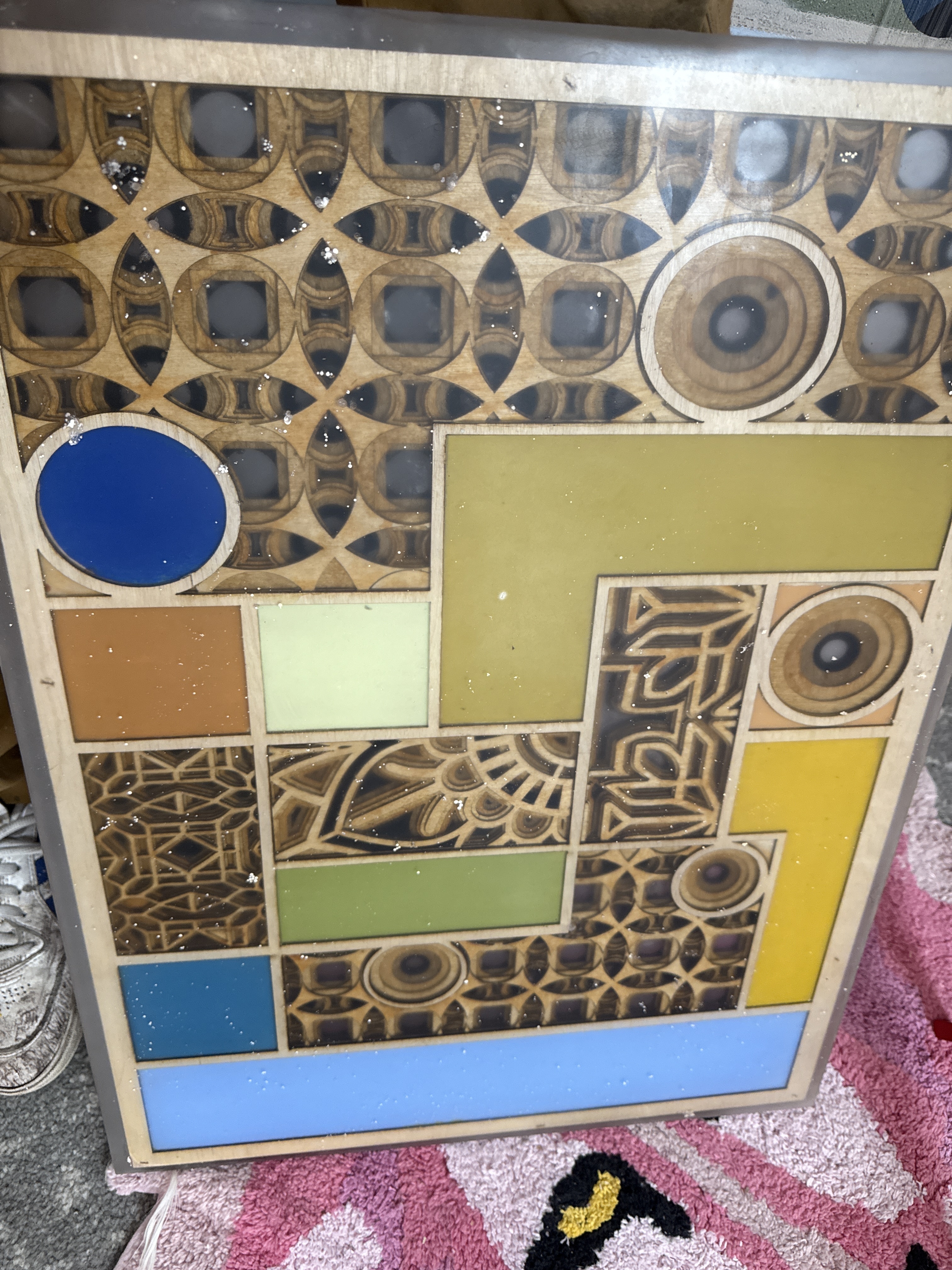
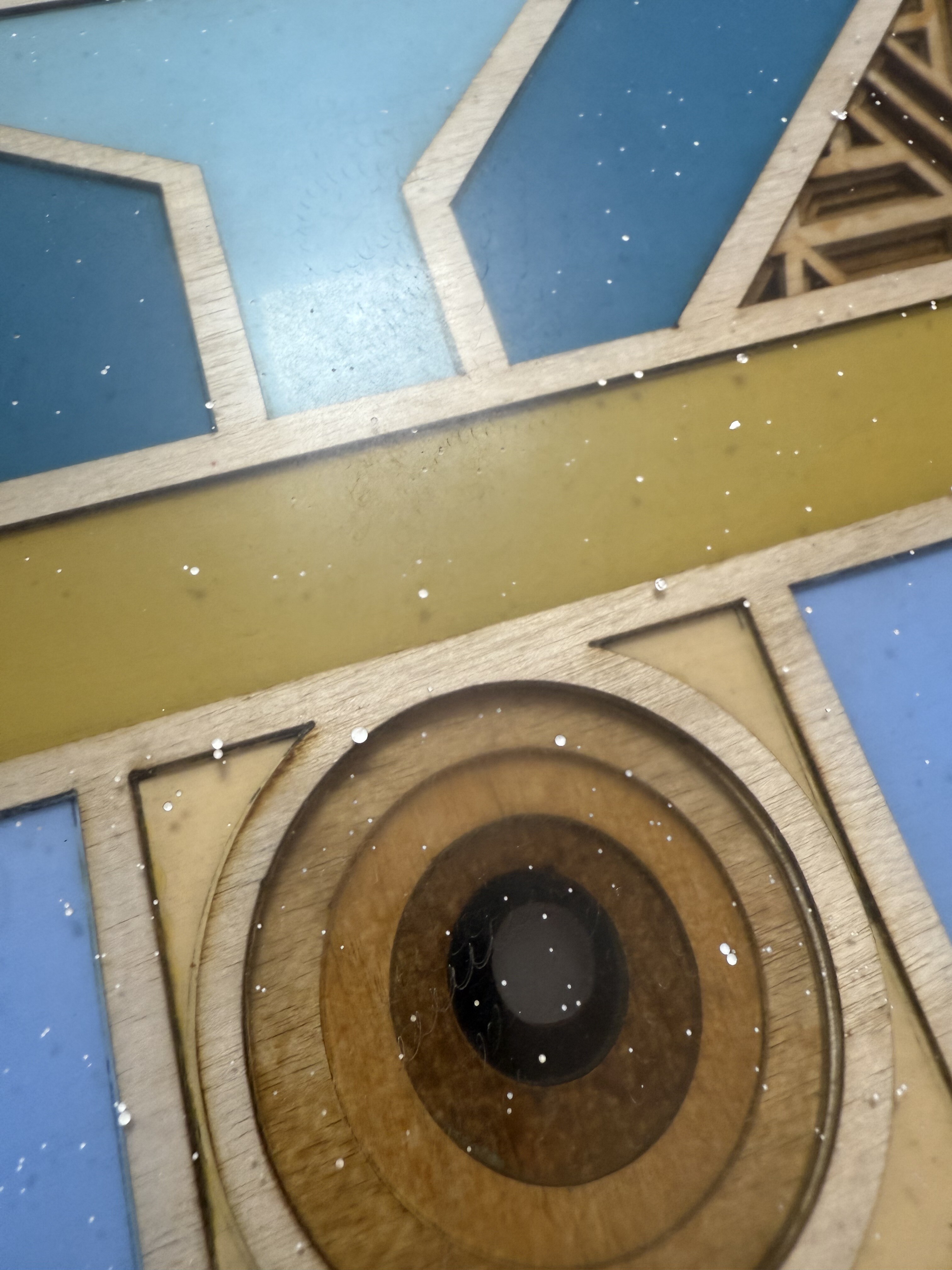
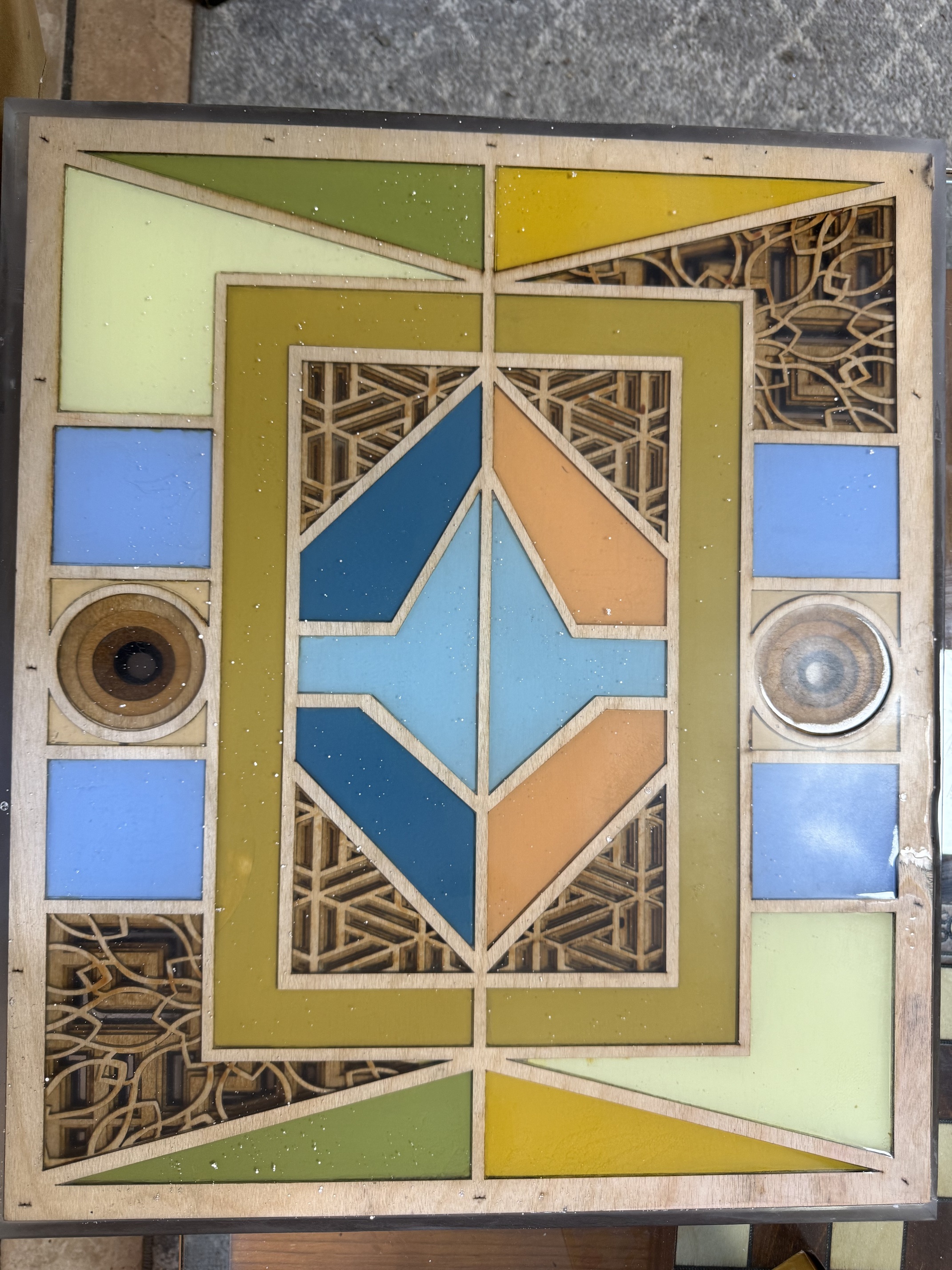
I am at a point of urgent help. I have the following wood pieces i covered in epoxy. Over night some bubbles came up (I did use the heat gun method to get as many as I could out).
When I saw it in the coming days it was cured bubbles on the top. I had to sand down and I bought grit up to 8000.
I bought all of the things to polish it back, but after polishing—the sanded down epoxy dust is stuck in bubbles.
I will literally do anything right now for help if there are any epoxy experts here. Please tag them if you know em.
This is going in a public art piece that has to be installed this Sunday, and I am happy to pay for someone to help me get this right.
Trying to understand better the situation: Are the bubbles and dust caught under a layer of epoxy? If you took some cleaner or isopropyl alcohol to clean up the dust / residue, are you able?
If all of the bubbles are exposed on the surface, I have 2 potential options:
shave down the epoxy down past the bubble layer (is it 30” wide or less? Could go through the powermatic once it’s cured enough, otherwise could CNC flatten off the top layer. CNC is likely the better option) then repour the top layer if needed.
annoying option, but I’ve been there. You can get a small metal pick, remove debris from each bubble, then mix your epoxy in a syringe and fill each void individually.
Likely reasons this happened that I can think of would be that this appears to be a pretty deep pour, may have taken longer for all bubbles to rise to the surface. Additionally, plywood (and wood in general) can retain air. If it’s fully encased in epoxy, the wood can release that air as curing happens. I’ve heard of people pre-sealing wood layers in a thin layer of epoxy before the deep pour, but never done that myself.
or go the other way. add more “flaws” to make it part of the design intent retroactively
like pick one square and put gouges along it that are confined to that region and running parallel. another is sanded to make foggy. maybe some way to do a wavy texture in another
So I’ve sanded so much down already that if I keep sanding—it will hit the wood. I’ve ordered more epoxy, and what I’m going to do is use denatured alcohol, then hit it with an air compressor, and then repour a small /thin amount on top to fill in the cracks/bubbles.
I did try acetone to soften the packed epoxy—based on James’s recommendation, and it slightly worked. I’ll give the alcohol a try today!
Also, for what it’s worth, the pieces themselves are really great and well done. If you don’t get it perfect, people will still appreciate the work itself. Most won’t even notice the bubbles, especially if they’re not able to view it up close.
Drew’s suggestions are spot on. Plywood is notorious for having air voids and the glue layers releasing air as the epoxy cures. Presealing future pieces (thinner epoxy or even shellac for a faster option) will help. Deep pour epoxy cured between 65-80 degrees yields the least bubbles. I like putting a plastic tarp over top as it cures to keep bugs and dust out. A good deep pour epoxy needs three days without movement and seven days before fully cured.
All that is for next time. Your approach on the current project is all you can do at this point. Sanding/removing and building new is usually the only way of fixing a bad epoxy result.
I’ve stopped pouring table top epoxy and usually finish my epoxy projects with a hard wax oil these days.
Beautiful piece though! My kids and I were walking through ABIA earlier this week and they were asking where my friend from Asmbly’s art exhibit was.
vac the epoxy will help some, but as strveW says the main problem will be the air leaking out of the wood after the pour. without meticulous work sealing the wood it’s going to bubble out constantly. they don’t ever stop and you won’t be able to release them with a heat gun once the epoxy starts to gel
also, note that even vac degassed epoxy can easily capture air as it’s poured. the vac degassing doesn’t solve that much. when it’s poured over featured wood, even sealed, it van trap little bubbles outside the sealant layer. those can be brought to the surface and released though
I did seal the wood in spar urethane—3 coats! Sometimes you do everything you can, and air will find a way.
SO
I FIGURED OUT A SOLUTION!!!
I tried hitting it with an air compressor—that didn’t help. What did the trick was actually hitting it with a pressure washer!!! Now It’s beautiful, and I can go back to sanding to 8000 grit, and polishing after I pour a light coat of the same epoxy to filll the bubbles.
I’m not even going to pour—rather squeege the epoxy on