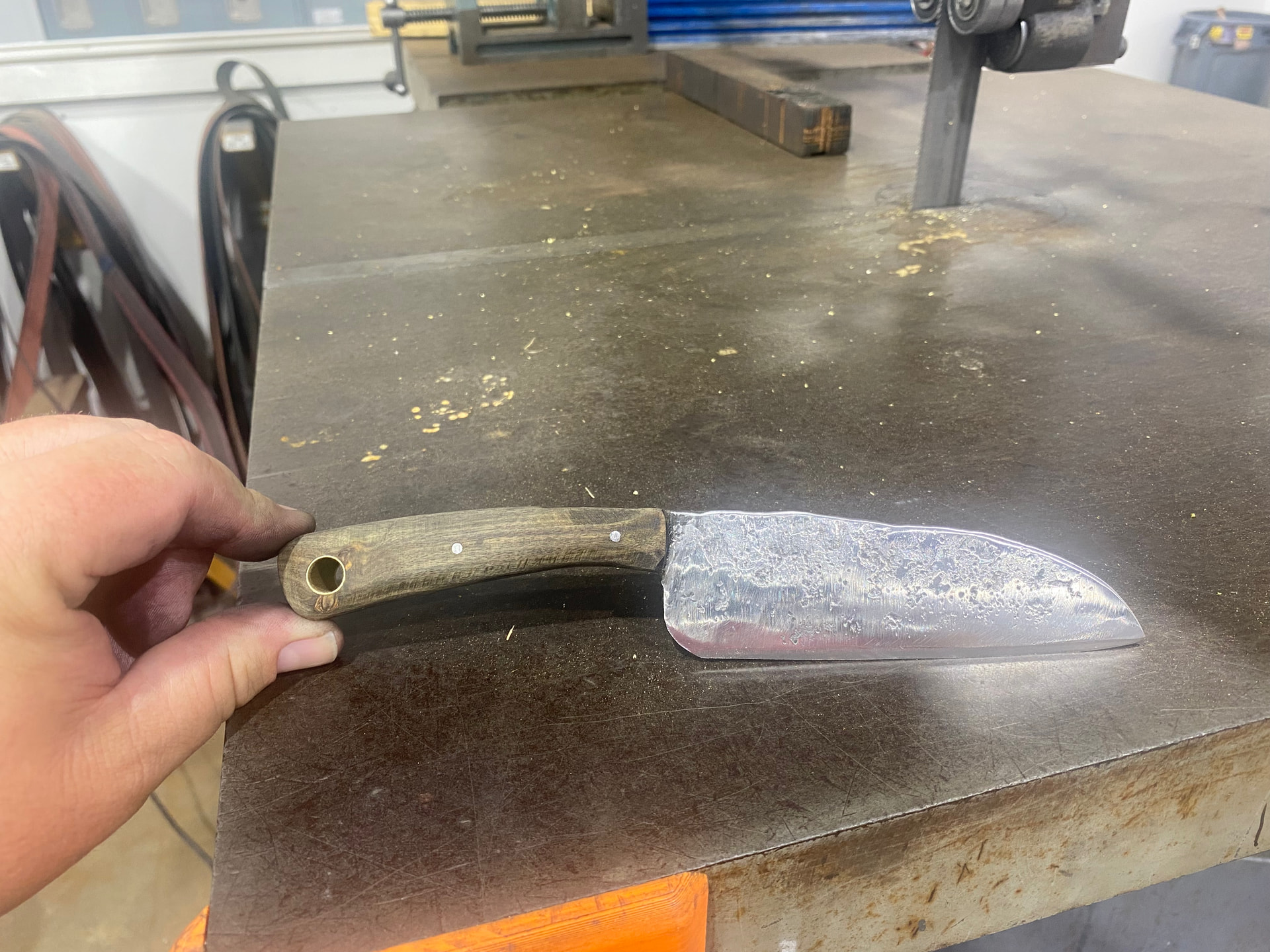
Learn the ancient craft of bladesmithing in this hands-on, two-day intensive where you’ll forge a kiridashi — a traditional Japanese utility knife — from raw high carbon steel. From fire and hammer to finished handle, you’ll touch every step of the process and leave with a blade that will last a lifetime.
Day 1 — Forging (6 Hours)
We start outside at the forge, where you’ll spend the first four hours working with fire and steel. You’ll isolate handle material, draw out the blade, forge in the tip, and develop the all-important bevel. Forging a proper bevel is one of the most skill-intensive parts of the process, and you’ll learn both the technique and the metallurgical reasoning behind it. The final two hours move into the Metal Shop for grinding, drilling, thermal cycling, quenching, and tempering. You’ll learn how heat treatment transforms brittle hardened steel into a tough, durable blade.
Day 2 — Final Blade Work and Handle Work in the Woodshop (6 Hours)
With your blade finished, you’ll shift to the Woodshop to craft and fit your handle scales from hardwood. Using the table saw, drill press, and bandsaw, you’ll trace, cut, and shape both scales before fitting and gluing them with epoxy. Final shaping and finishing bring everything together into a complete, one-of-a-kind knife.
What You’ll Learn
-
Isolation and drawing out of steel at the forge
-
Forging a tip, profile, and bevel by hand
-
Normalization, quench hardening, and tempering
-
Woodshop use: table saw, drill press, and bandsaw
-
Handle fitting and final assembly
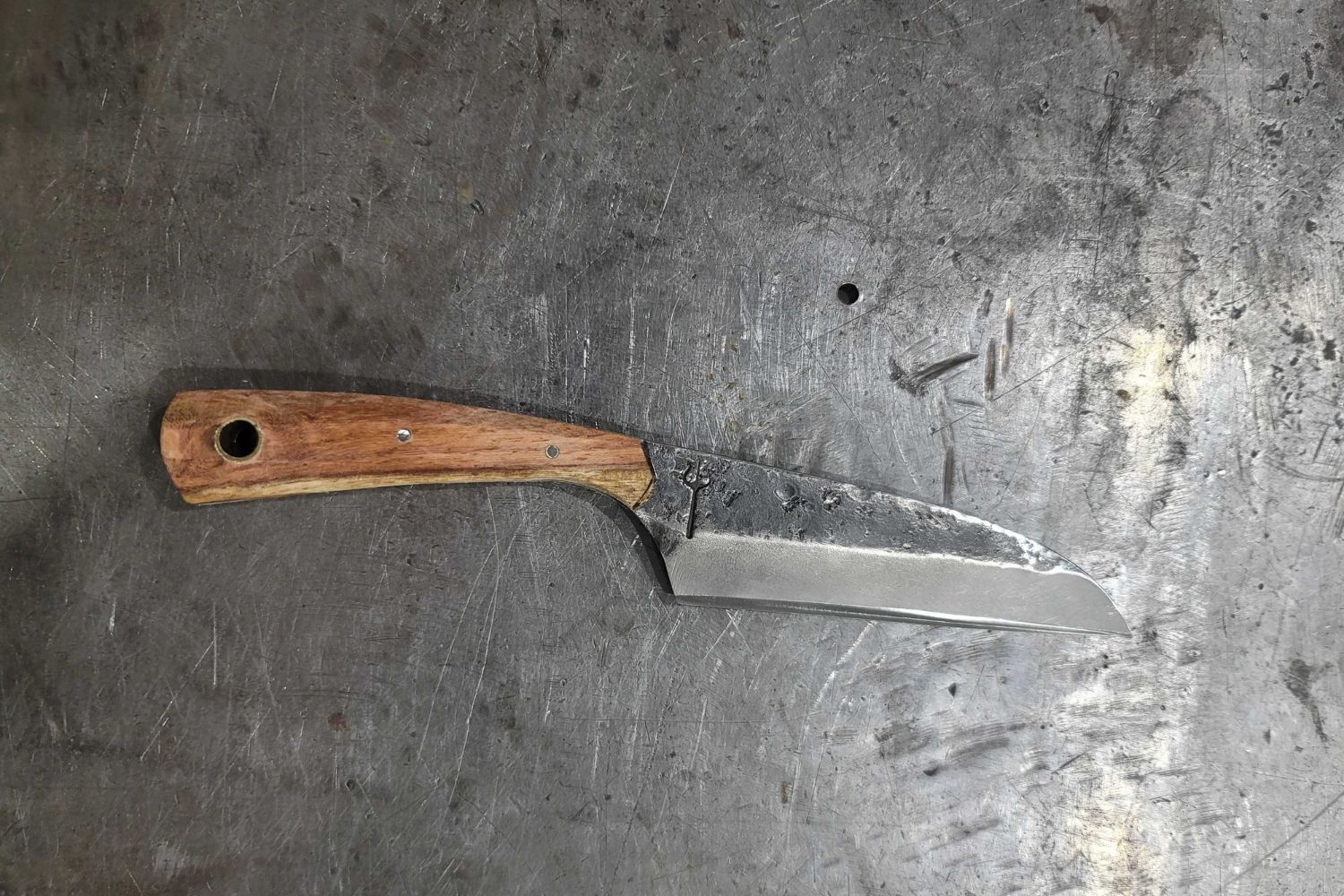
What You’ll Take Home Your completed kiridashi — a sharp, hand-forged high carbon steel knife with a shaped hardwood handle.
This class will meet in the back parking lot for the forging portion, and finish inside the metalshop.
-
Bring a large bottle of ice‑cold water to stay properly hydrated throughout the session.
-
Pack a hearty lunch and snacks, it’s going to be 2 full days of forging, grinding, shaping, and fun
-
Wear natural‑fiber clothing: cotton or denim long‑sleeve shirts and jeans are best. Shorts are not allowed.
-
Closed‑toe shoes only, boots are ideal.
-
Use a hat or bandana to keep hair secure and away from open flames.
-
Eye protection is mandatory, bring safety glasses or similar protection.
-
Leather aprons provided by the instructor for added protection.
Join the first class session HERE (9am-3pm on June 20th and 21st)