Let me know if you need any help? The team has a great plan.
2 Likes
Nick, I’m available, as well, if you need any help… jus holler
2 Likes
I’m looking to do some test cuts on the dibond panels using the big CNC either on Monday or Tuesday if anyone who is very familiar with vcarve/big CNC ops will be able to help at all. I’m approved to use the machine, but don’t want to break my fancy single flute bit I bought for this job.
Let me know and we can coordinate a time!
I’m available Monday and Tuesday afternoon with regards to the big CNC. I checked the big CNC schedule and you’ve not signed up so I don’t know exactly when. Also send me the VCarve files so I can understand what shapes you are trying to cut. P.S. I have not worked with Dibond panels whatsoever, yet I’ll bring my end mills too - just in case. P.P.S What size end mill(s) are you using?
Did a quick search…
When routing Dibond (or other ACM/ACP panels), the total panel thickness is typically 3mm (approx. 1/8"), consisting of a solid polyethylene core sandwiched between two very thin aluminum skins (about 0.2mm to 0.3mm) thick each). [1, 2, 3, 4, 5]
Use sharp 1-flute or 2-flute solid carbide O-flute bits to ensure clean chip evacuation and to prevent the soft aluminum skin from melting onto your bit. [1, 2]
Recommended Feeds & Speeds
These baseline parameters are calibrated for a standard 1/4" O-flute bit and can be adjusted for your specific machine. [1, 2]
- Spindle Speed (RPM): (10,000) to (18,000) RPM
- Feed Rate: (100) to (150) inches per minute (IPM) (approx. (2500) to (3800,\text{mm/min}))
- Plunge Rate: (30) to (50) IPM (approx. (750) to (1270,\text{mm/min}))
- Depth of Cut (DOC): Cut through the full (3,\text{mm}) thickness in a single pass (if your CNC is rigid enough). If your machine has less rigidity, take a (1.5,\text{mm}) pass, followed by a final full-depth pass. [1, 2]
Note: The key to cutting Dibond is preventing friction. If your feed rate is too low in comparison to your RPM, you will rub the material instead of cutting, which melts the plastic core and dulls your bits instantly.
Tips for Success
- Bit Direction: Use an up-cut O-flute for standard through-cutting to clear chips effectively. Use a down-cut bit if you are only engraving the top aluminum layer (like v-carving or folding) to keep the top skin from lifting.
- Workholding: Because ACM panels are thin and flexible, use a vacuum table, double-sided tape, or mechanical clamps to secure your material. Foam backing under the board can also help reduce vibration and prevent the aluminum from lifting.
1 Like
Just booked 12-4pm on Monday if any time in there works for you?
Your search and mine were pretty identical, i’ve a 1/8” Single o flute bit.
I will pm you the vcarve file!
Revised: See you there tomorrow 5/25 at 12 Noon.
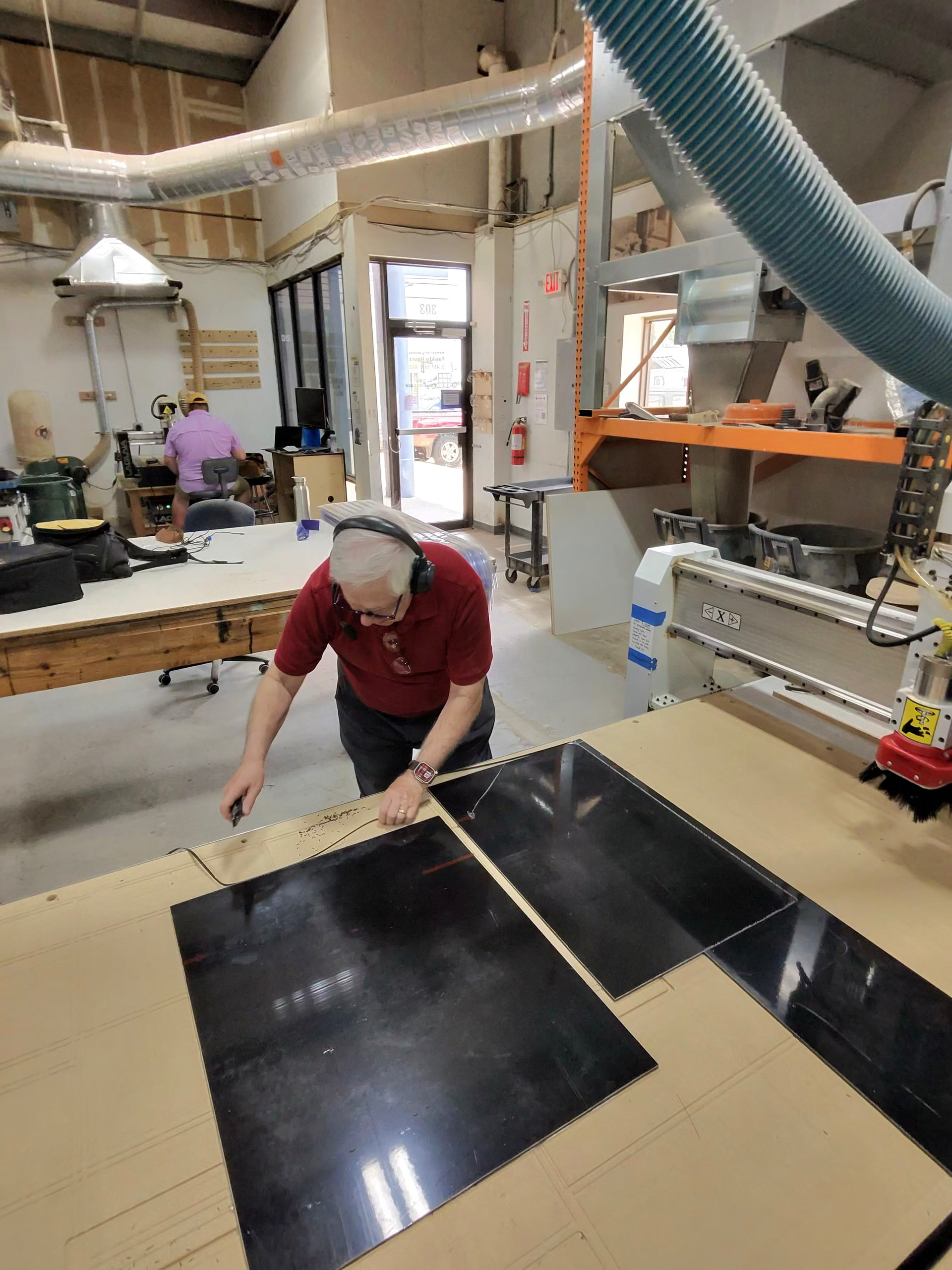
Thank you for the help today @bwatt !
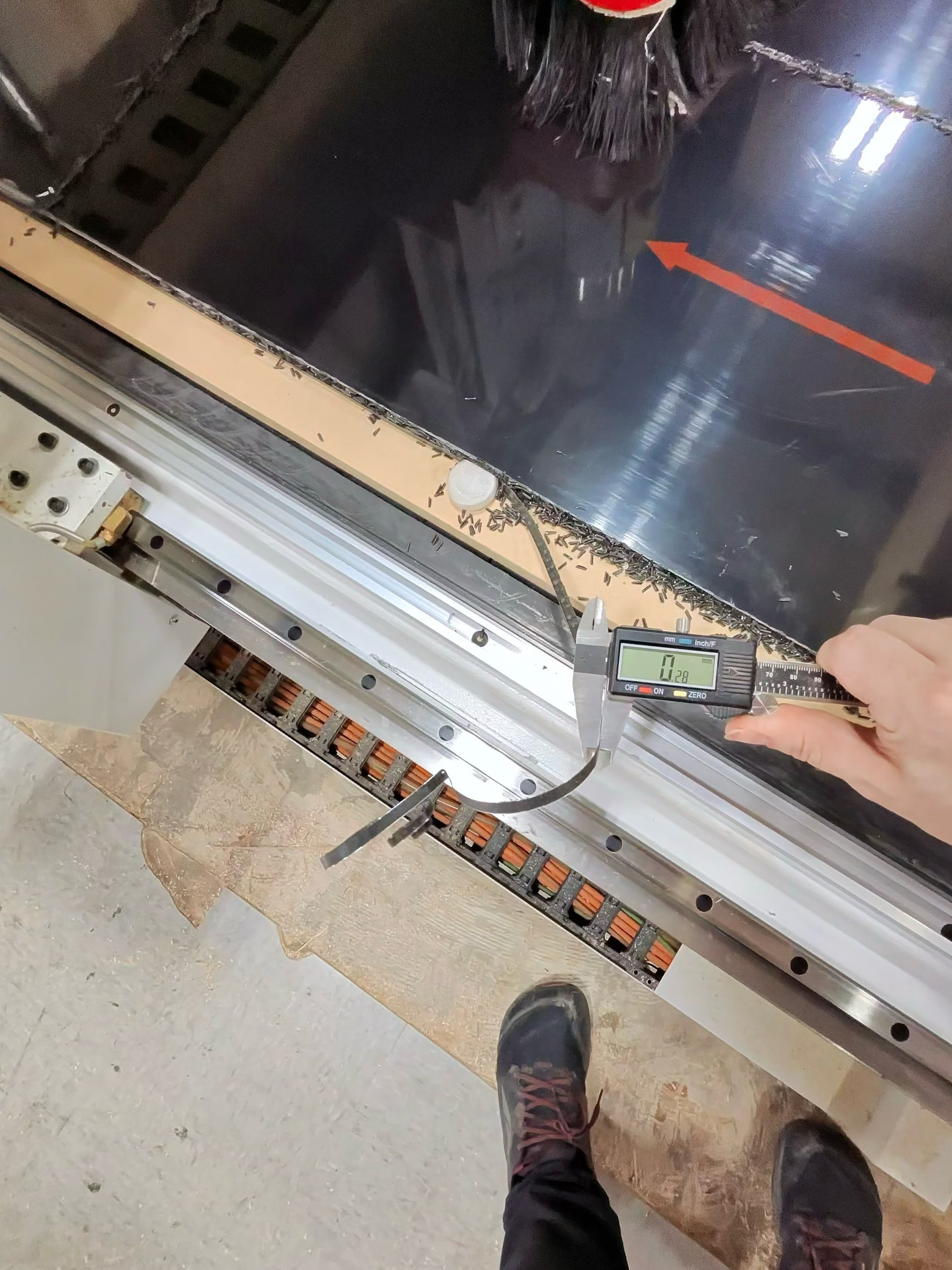
We got some of the MOPA enclosure done, along with new windows for Tarkin!
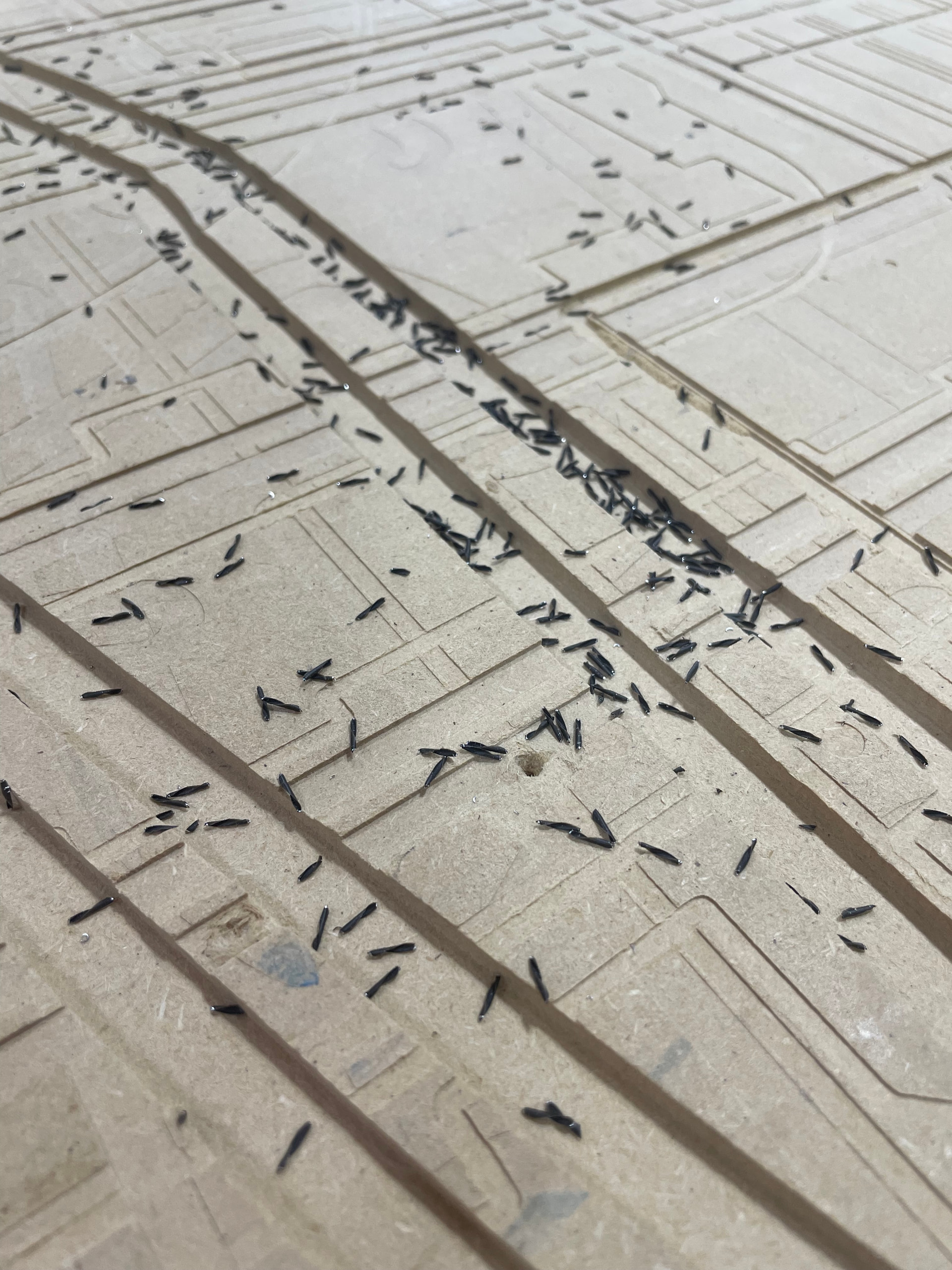
(We also made some acm paper with tight cut tolerances, and learned that single o flute mills make mouse poop shaped chips  )
)
4 Likes