I want to recognize that the wood shop leads are aware of the limited space we have in our very busy wood shop, which a great thing! One particular area that often suffers a bottleneck is our glue up tables.
First, I want to remind everyone that the use of the glue tables is for a maximum of 24 hours. There are no exceptions. However, if you are unable to remove your glue up from the building, you may place it under one of the glue up tables within the 24 hour time frame.
Second, session tables for session use only as determined by the length of your skedda booking. The session tables may NOT be used for glue ups under any circumstance.
Here are a number of suggestions on glue up table etiquette which will benefit everyone.
Please use an appropriate sized clamp if possible. For example, if your glue up is 18 inches long, try to use a 24 inch clamp. To often, we see a 48 inch long clamp on an under 12 inch project. This takes up an inordinate amount of space and limits the available for someone else’s project.
Please make sure your clamps are NOT hanging over the edge of the glue up table. Myself and many other members have had nasty scratches on our hands, arms and bodies when walking by. If you must use a long clamp and cannot fit on the glue up table without them overhanging, please place it under a glue table.
Please use a wood shop approved tag that must include your phone number so we may contact you if necessary. Writing your name on the brown paper is problematic for several reasons. First, we have no way to know what project goes with what name as projects get shifted around the table (see next bullet).
If there are multiple glues on table that are spread out and can be reorganized to make more room, please be careful and considerate when moving them. If a clamp comes loose, please re-clamp it.
If there are a few glue ups on both tables and they can be consolidated to one table to make room for your glue up, again, be careful and considerate when moving them. If a clamp comes loose, please re-clamp it.
If there is absolutely no room on either table, then you have two options. 1) if it is safe and appropriate, consider moving another project under a glue up table. 2) please be respectful and delay your glue up until there is room to safely do it. Yes, this is inconvenient. Yes, it can be frustrating. However, Asmbly is a community Maker Space and we must be respectful of each other. Each of us is in the same position whether it’s the CNC isn’t available when we need it, the jointer is tied up by someone else, or worst of all, a machine is red tagged. We’ve all been there, and the glue table is no different.
To reiterate, the wood shop leads are aware of this bottleneck and working on long term solutions. These will occur, but not yet. So in the interim, please be patient and courteous as welcome and address our growing pains.
If you have any questions or positive comments, we welcome them.
Thank you all for your patience, support, and assistance.
Thanks Michael, No objections to what you shared but I wanted to offer an additional option. Glue doesn’t need to dry for anywhere close to 24 hours. Raise your hand if you have aborted a glue up because you took too long. raises hand. Glue starts to grab very quickly!
Titebond’s website says “For most of our wood glues, we recommend clamping an unstressed joint for thirty minutes to an hour. Stressed joints need to be clamped for 24 hours. We recommend not stressing the new joint for at least 24 hours.”
Most of the joints in your project are probably unstressed. So another option is to
Glue Up
Do some equipment maintenance for 30 min
Unclamp
Gently place the project in the car or 7-day storage
Go home
Don’t throw your project around the room, but it’s plenty strong enough for light transport. I don’t think I have ever stored something on the glue up tables or had anything break with this method.
Austin
I suppose the 24 hour rule was made for doing a glue up and going home to wait…. But wow this shop would be 10x cleaner and function better if everyone did a little TLC while waiting enough time to unclamp and move their projects.
A few years ago I made a “California Garden Bench” with only glue, no screws. I was short on clamps, so I watied about 15 minutes between individual glue-ups to unclamp and glue another section. In a short time I had the whole bench in clamps. I removed them a few hours later, took it home and proceeded to stress test it the only way I know how: jump on it. I’m still here and so is the bench!
That said, don’t glue-up a panel and immediately run it through the planer or joiner or milling tools. Give it all some time to cure up well.
I typically do glue ups on my session tables within my scheduled time (as the glue up tables always have something on them)
and remove them within my scheduled time as the glue sets up good enough for transport in an hr or so.
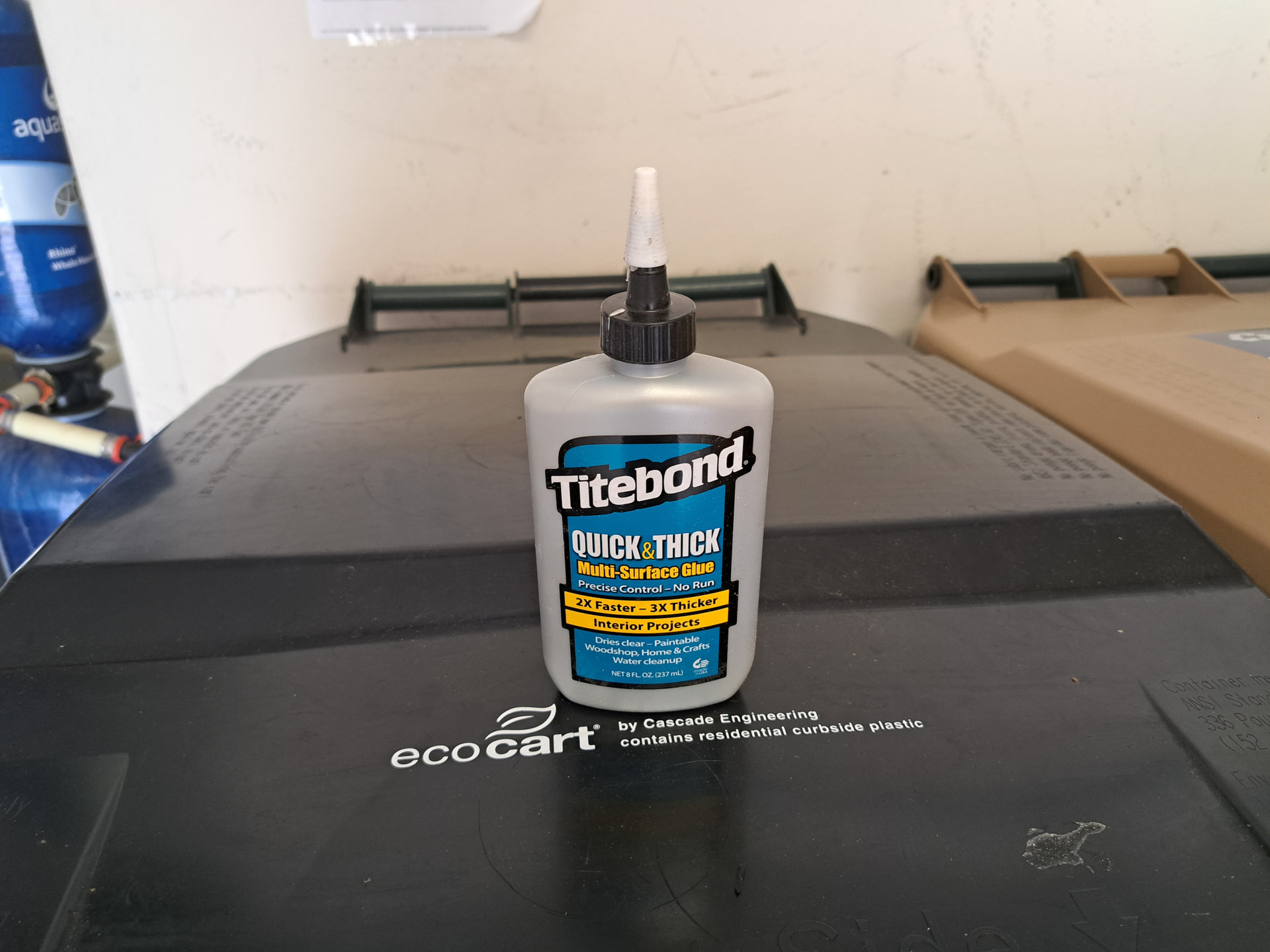
I agree with all. I have been using tight bond quick and thick. It has a recomended 15 minute dry time. I have been planning to do all my glue ups early in my session and I can remove them before I leave or later in the session. One recommendation is we have a deficit in 18 to 24 in clamps and is prob why members are using bigger clamps for small projects.
My comment was directed at using session tables to leave glue ups on them after a member session ended. Instead of removing or transferring their glue up to the glue table, they were leaving them there tying up session only tables for up to 24 hours. I hope this clarifies my comment.
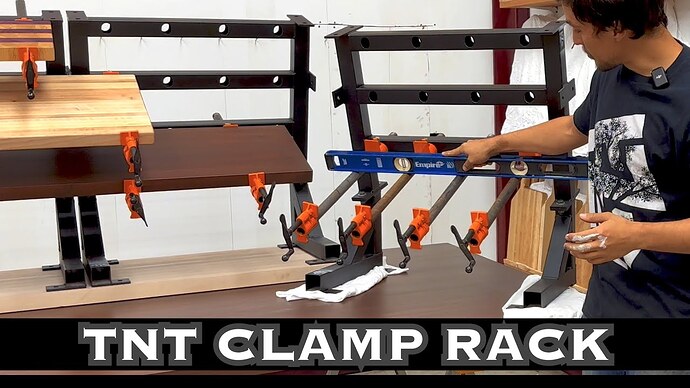
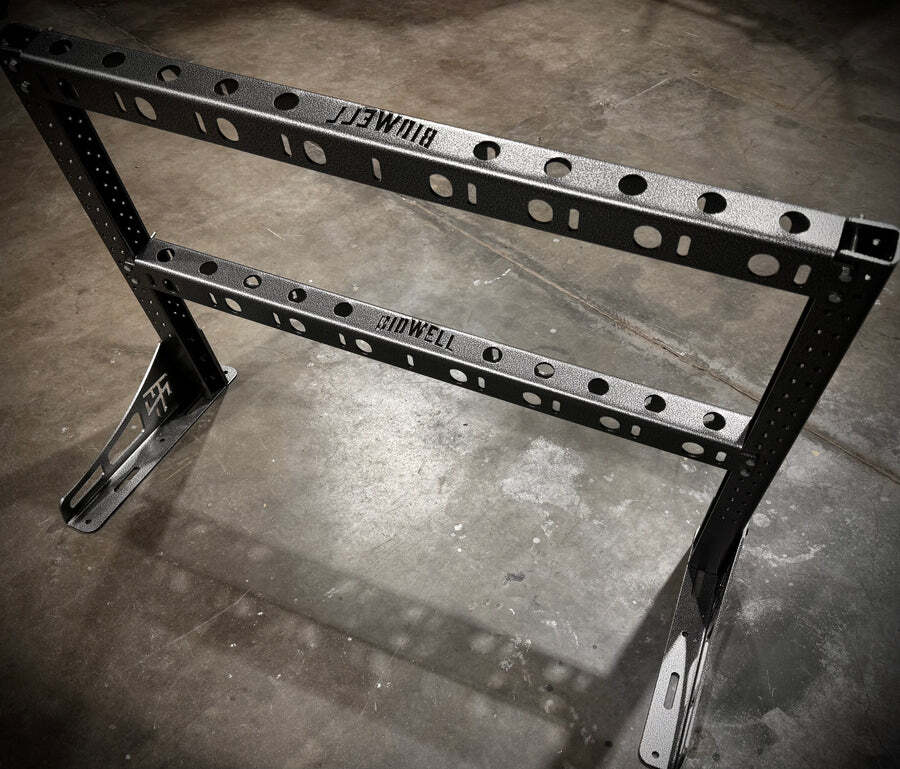
Here is a simple clamp rack that could be fabricated to stack glue ups. Naturally it would require to stick or commit to one or two kinds of clamps. Pipe clamps are not too expensive and they do last a long time, can take some abuse, and can be repaired. I’m not bashing or anything like that but most clamps in Asmbly are not much good. If it wasn’t for somebody that cleans them regularly (yes, somebody does, there are signs of that), they would not even work. Anyway, I’m planning in donating $300 of 3/4” pipe clamps in the near future. Another alternative that not many people know or have experience is an RF high frequency portable wood welder that sets the glue rather quick so there is no reason to wait for later. Usually a shock of half a minute or so every foot on every joint would set the glue (on 4/4” lumber) almost instantly. They can be found for around $3000 used and the learning curve is very low. A video is below that explains how it works.
Any Titebond glue (1 to 3) can be moved safely in 30 to 45 minutes depending on the ambient temperature. Like mentioned above don’t go crazy dropping or throwing the glued pieces around. There is no need to use the 15 min. kind. If your stuff is over 18” long and you have more than two glue lines more than likely the 15 min. glue would start setting before you put any clamps or pressure on your stock. The open time of that glue is very low.