Fired mugs are molding?

Ceramicists, I need some advice!

This spring I fired a batch of mugs at Asmbly using Cinco Blanco clay, fired to cone 6. A few months ago, I noticed that after just one day of use, the unglazed bottom of one mug had developed mold. At first I thought it was just a coffee stain or because the foot was unglazed. I cleaned it, re-fired the mug to kill the mold, and added a clear glaze to the bottom.

Now I’m noticing the same thing happening on the unglazed bottoms of several of my other mugs. It’s happened with mugs used for both coffee and water, and in different environments (at home and at work).

Has anyone experienced this before? Does it sound like my pottery isn’t fully vitrifying, or could something else be going on? More importantly, is there any way to get rid of the mold or prevent it from coming back?

I was planning to sell these mugs, so I’m a little worried. :face_holding_back_tears:

Hi Kate!

I’m sorry to hear about your mug/mugs. It sounds like the absorption rate of your mug is too high. Here’s a general guide for safe absorption rates:

  • Under 0.5%: vitreous/impervious — essentially watertight, the gold standard for functional pottery
  • 0.5–2%: generally considered food-safe and durable for daily use
  • 2–5%: semi-vitreous — porous enough to be a concern for anything holding liquid long-term (like your mold issue)
  • Above 5%: non-vitreous — too porous for functional food ware, prone to staining, bacterial/mold growth, and thermal cracking over time

You mentioned you refired the mug, did you refire it at Asmbly? If not, do you know what cone it was refired to? Has mold returned on the refired mug?

The Armadillio website states the absorption rate for Cinco Blanco is (+/-1%): 2.8% (I’m assuming that’s at Cone 5 because they have absorption rates listed for other clays at Cone 5). We generally fire at Cone 6 to a hot Cone 6. I would expect the clay to be vitrified at Cone 6.

A quick way to check: do a water absorption test. Weigh your mug dry (be sure to let it dry for several days before weighing), boil it submerged for 2 hours (or soak 24 hours in room-temp water), blot dry, and weigh again. (wet − dry)/dry × 100 = % absorption. That would give us a definitive answer on the absorption rate.

We can refire your mugs and ensure that they’re hitting Cone 6. Glazing the bottoms is also a good instinct and reduces the amount of surface area to pull in liquid-- but ultimately we want to be sure any functional ware (especially anything you’re planning to sell) is vitrified.

edit to directly answer your questions:
We haven’t had any previous reports of this happening with items fired at Asmbly before, but that doesn’t mean it hasn’t happened. It does sound like your pottery isn’t fully vitrifying-- what you’re describing are the classic signs of clay that hasn’t fully vitrified. The only sure-fire way to prevent the mold from returning is to ensure the mugs are fully vitrified. You don’t have to clean them before refiring as the kiln will burn out the mold. You can always scrub the mold and soak in various solutions (bleach, vinegar, hydrogen peroxide) to clean them but ultimately the mold will return.

Thank you for the quick response and all of this information!

I haven’t checked to see if the refired mug grows mold yet but will test that this week. But yes, refired at Asmbly as well also at Cone 6.

Going to try the absorption test too. And see if I can rid it of mold using the tactics you noted!

Do you have any tips to prevent this in the future besides firing things twice? Maybe I should be using different clay or a higher cone?

Will try to upload some images if I can too

Hi Kate,

No problem! Always happy to help where I can.

If you haven’t used your refired mug, I would suggest running an absorption test on it and one of your unrefired mugs that is growing mold – that way we can see difference between refired and the original.

To be transparent – I haven’t really used Cinco Blanco very much since my first couple of sessions of pottery classes about 4 years ago. I’ve mostly worked with highfire clay in a gas reduction environment. 2.8% absorption rate was a bit higher than was I was expecting to see for Cinco Blanco as it falls into the semi-vitreous range and is porous enough to absorb liquid long-term. Again, I believe that’s at Cone 5 and so firing to Cone 6 could result in a lower absorption rate.

That said, you’ve piqued my interest and I am planning to conduct some absorption rate tests myself. It’s possible (and I would hope) that this was a more isolated incident where perhaps part of the kiln didn’t reach Cone 6 temps. We do use witness cones to ensure we are hitting the correct temperatures. I think the best move for us will be to test the absorption rates and see what’s going on.

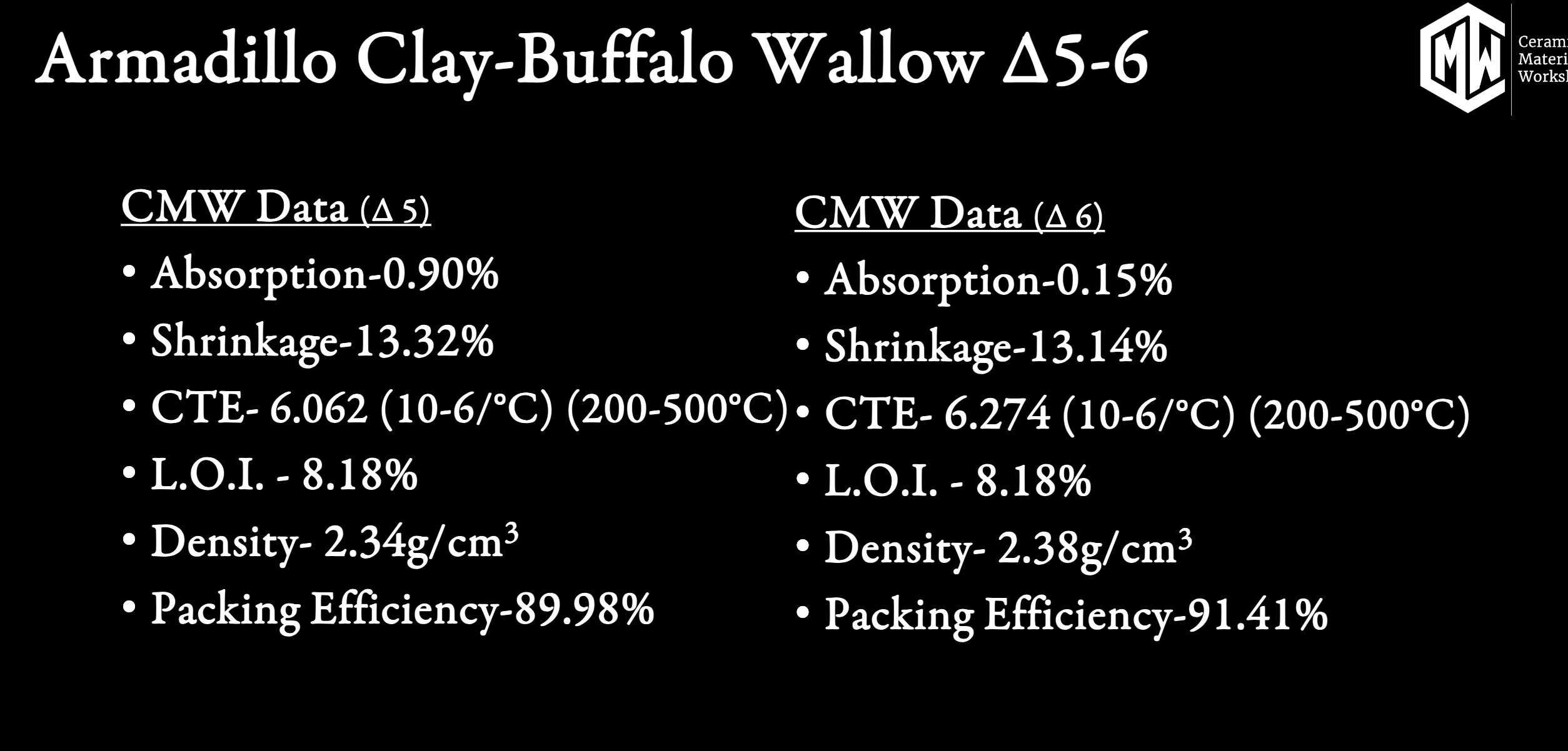
As far as preventing this in the future – you could use a different clay that has a lower absorption rating. For instance, Buffalo Wallow (the light red-brown clay body we carry in shop) is rated at 1.73% which falls into the .5-2% food safe range. Ceramics Material Workshop actually released testing data last year regarding various commercial clay bodies and tested Buffalo Wallow (unfortunately, they didn’t test Cinco Blanco).


Their testing found that at Cone 5 the absorption rate was actually lower at .90% and at Cone 6 it was at .15% which would fall into the fully vitreous/impervious category.

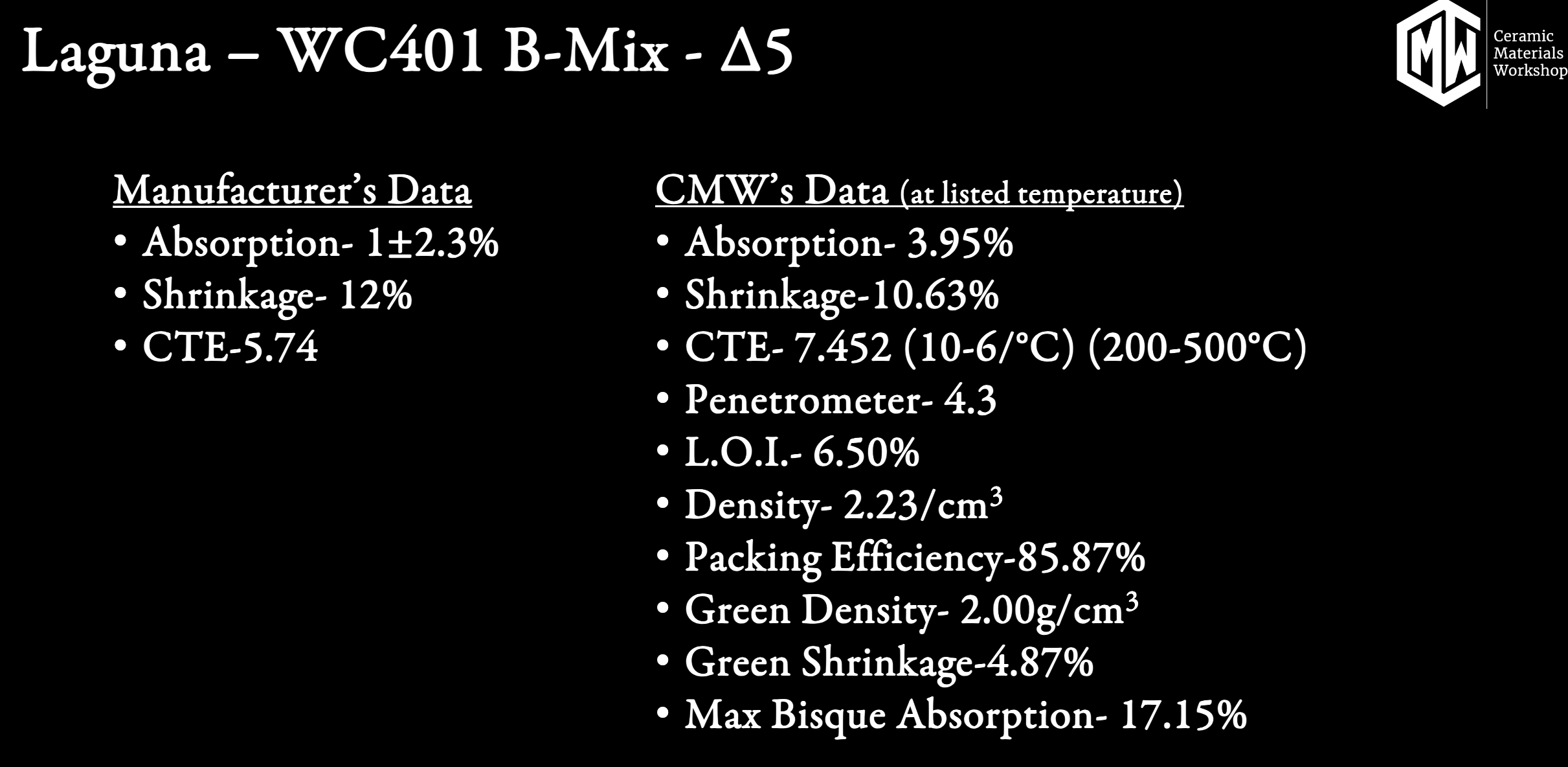
For you work in particular, I am not sure if Buffalo Wallow would meet your needs as I know you use the exposed clay body for a sandy beach effect. B-Mix is another popular commercial product from Laguna and has a nice sandy color, but CMW tested that particular clay body and it performed even more poorly than advertised. Although they didn’t test it to Cone 6.

Firing to a higher cone is an option, but clay bodies can begin to bloat when fired to a cone higher than its rating and could melt completely if fired too high.

I wish I could give you a really easy answer, but I think our best bets are to conduct absorption testing and see where we’re landing. If you test your refired mug and your, presumably, underfired mug – I think that will be an important data point. I’ll conduct some AR testing as well and we can figuring out if Cinco Blanco is hitting 2% or below in our current firings. If it isn’t, we can ensure our kiln is hitting the correct temps (which from all acccounts, they should be) and move on from there. Alternatively, if you can find a different clay body that will serve your aestethic and reliably matures/vitrifies at Cone 5/6, then using that clay body may be a better choice for you.

Either way, I am glad you brought this to our attention. If Cinco Blanco isn’t maturing/vitrifying at Cone 6 on a regular basis, then we may need to reevaluate offering it to members as it is definitely being used for functional ware on a regular basis.

Just as an example-- Kentucky Mudworks clays are already approved for use at the studio and this particular clay body has a reported absorption rate of .5% when fired to Cone 6 and closely matches the color of Cinco Blanco.