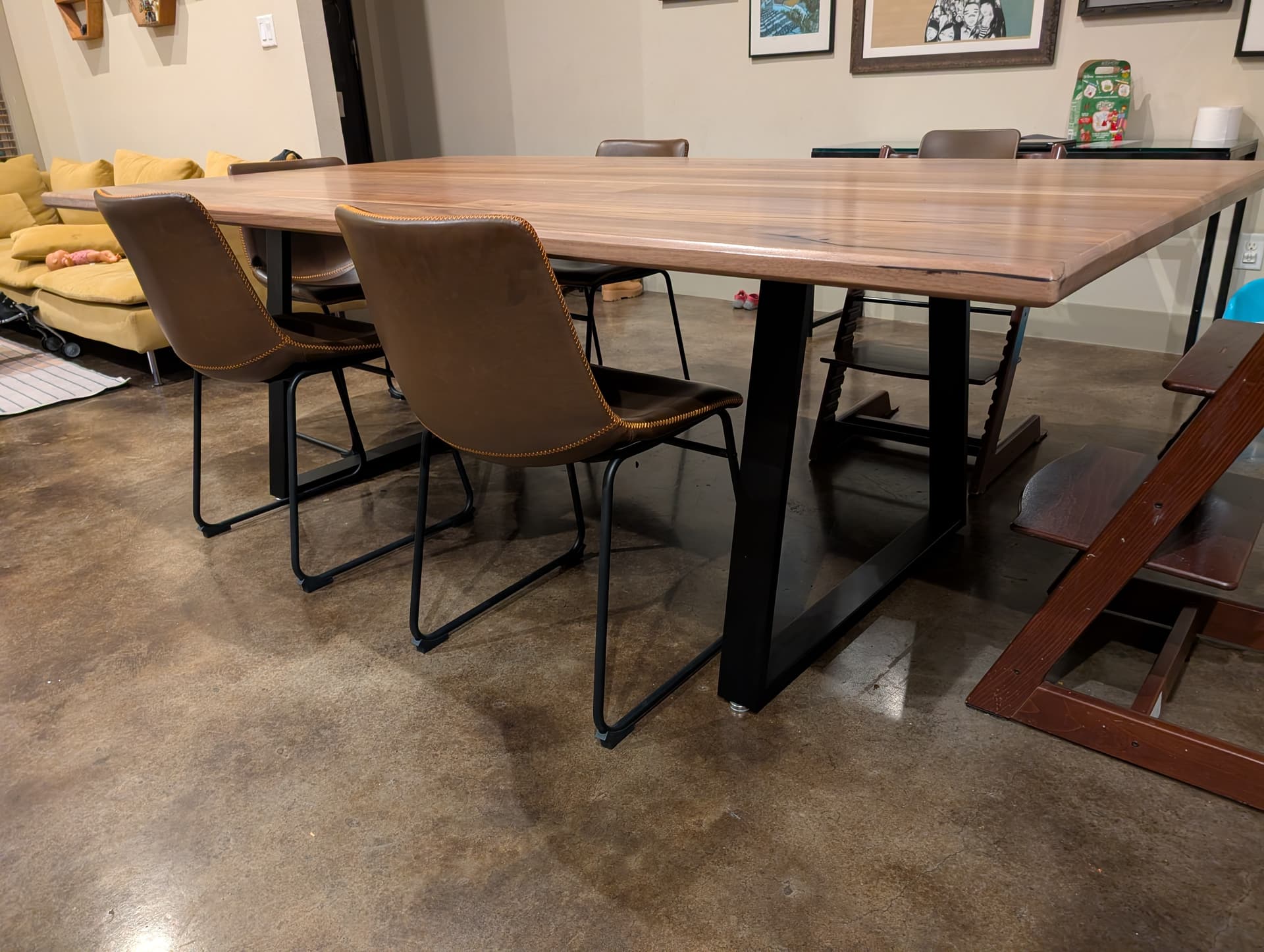
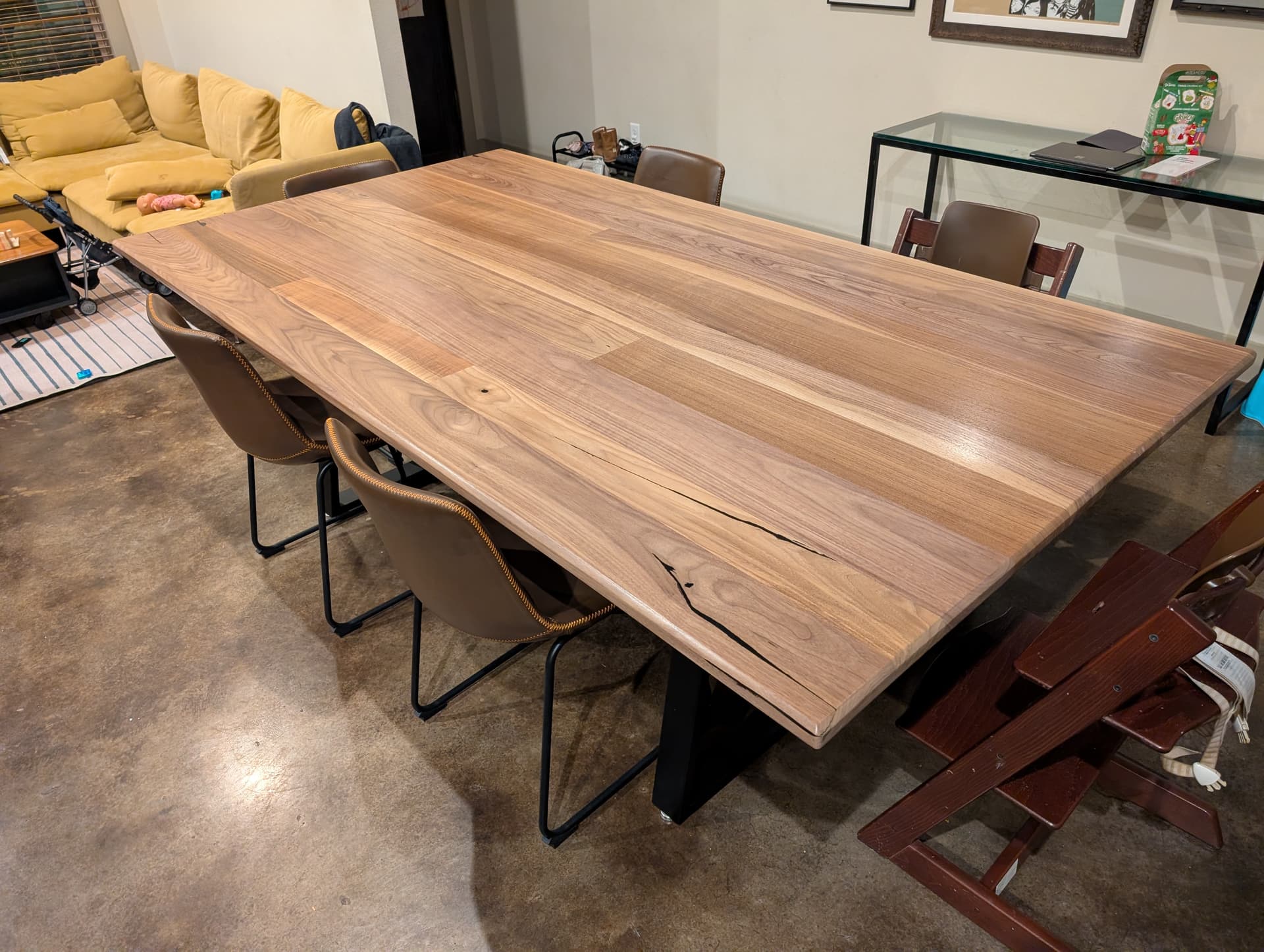
Y’all may have seen me around the shop royally messing up version 1 and/or working on version 2 in the last couple months, but I wanted to share some pictures since the table is finally finished and in place. Love how it turned out!
9 Likes
Wow Scott, it is absolutely beautiful! You should be extremely proud of this table and what a blessing to share meals, family time, a lounge around it. I cannot wait to see what you create next.
1 Like
“Royally messing up”? Be more positive, is gaining experience to come up with a better end. I’m glad you kept it simple, rather elegant lines.
4 Likes
That is gorgeous!! What type of wood is that?
1 Like
Thanks all!
The wood I used is Walnut from Fine lumber and plywood.
1 Like
Wow! That’s a rockstar level table! It looks so seamlessly put together. Awesome job!
If you don’t mind sharing, since I haven’t been doing projects in the woodshop recently, but how did you finish the table after gluing the strips of wood together? Was it a lovely sanding exercise of 220–>320–>400–>600 grit with the orbital? Were there any difficulties with finishing?
I don’t know why but I seem to always think a fly is going to land on any bit of wood I’m finishing…
1 Like
Gorgeous table! Well done!
1 Like
@Joaquim happy to share a bit of my process. I glued up at Asmbly, and immediately took it to the CNC to get it flat. That got me to a pretty good place, and it also allowed me to cut out a recess for the legs and the C channel I used for bracing. Next I took it to my house and stuck it in the garage, where I did all the sanding, and about 8 rounds of black epoxy filling in lots of little holes and mistakes. Next was sanding. I started with 60 grit for some of the crazier epoxy situations, but quickly moved to 120, and I did quite a few passes at 120, 6-8 would be my guess. With hindsight I might have benefited from a couple more as there are some bumps on the final product, but nothing too worrying. Then I went to 220 for a couple rounds, and that was it. I thought about going higher, but based on the General Finishes polyurethane instructions 220 seemed fine. Then I wiped down with paper towels to get rid of dust and applied the finish, with a 220 pass between first coats, and 320 before last coat. I did all the passes on the bottom first, making sure no finish dripped on the underside because I’ve had a lot of issues with that in the past. I ended up seeing some imperfections on my “final” coat, so just added one more with a bit more care and it worked great. Happy to help out with more questions if you have anything else you’re interested in, let me know!
1 Like
Wow. Super interesting. It almost seems like most of the effort in almost all well-finished woodworking projects is about 90% sanding, 10% other stuff.
Fascinating how you only needed to go to 320 grit and then added another layer of finish to remove any imperfections. I like it. I can certainly take that and run with it–appreciate ya sharing the insight.
The final piece looks professional. Excellent work.
1 Like