Hi folks! I have been struck by an urge to cast some concrete in 3D printed molds. I have done some slab concrete work before, but never finish-quality or casting. I know it is dirty, time intensive, and ruins tools! Who’s in?!
But really, if you have experience to share I’d love to hear from you!
If you’d like to do some casting yourself, I’d love to plan ahead for a day this fall that we can do it in bulk. If we have a bunch of people together, maybe we can rent a mixer and save the soreness. Any CNC folks want to make a mold pattern to cast into a planter or something?
Would there be space for this at Asmbly if we had a whole group? All it really needs is a hose connection, permission, and a disposal plan.
I’ll use this thread below to collect some links to things I want to cast. More ideas welcome!
Questions on materials that I don’t really know about:
I’ve seen a recommendation to use countertop mix, as it has a much finer aggregate for showing detail. It is pretty expensive in comparison - it seems like a diy mix or using shifted sand might be as effective?
Reinforcing fibers are often added for strength - what kind? Wire mesh? Plastic or fiberglass mesh? Particularly for hiding inside stepping stones.
Speaking of stepping stones, simple round molds that can be mosaic decorated at or before pour time are pretty common it seems. Anyone interested in that?
I recently did a small concrete planter. Meant for succulents. I didn’t use any reinforcements. Just poured it into a plastic restaurant cup and smashed another one. On top of it. It was fairly crude, but it came out pretty great.
I used quikrete 5000 because I had that left over from another project.
@Duckie and I made a whole bunch of little stones for the backyard.
I’ll drop some pictures in here as soon as I find them!
The larger project is a bit larger than what I think you were going for but just to add some reference for scale: we were trying to make a lavadero, essentially an outdoor scrub tub and sink. For the form, I used melamine in hopes that the concrete wouldn’t stick to it. Even with a bunch of mold release, this was a terrible idea and I don’t ever recommend it. Not only was it very difficult to remove, the inside form expanded quite a bit and ended up cracking the whole tub before we even got it out of the form. I used rebar in some areas that was too thick for the walls. I should have stuck to either thinner rebar or some 1-in square wire mesh. The sections that had that broke off cleanly.
If I were making smaller things like planters I’m probably not going to put anything in them for reinforcement. If I did do anything though, it would have to be very thin. In the larger projects, I was told afterwards from some more experienced folks 3/8 in thick rebar was too thick for the 1-in or 1 and 1/2-in walls.
I’d be interested in joining the fun as well, although admittedly for some fairly small-scale applications. I’ve had a wood-and-concrete lamp project in the backlog for ages, so learning about casting low-aggregate concrete in particular would be very helpful.
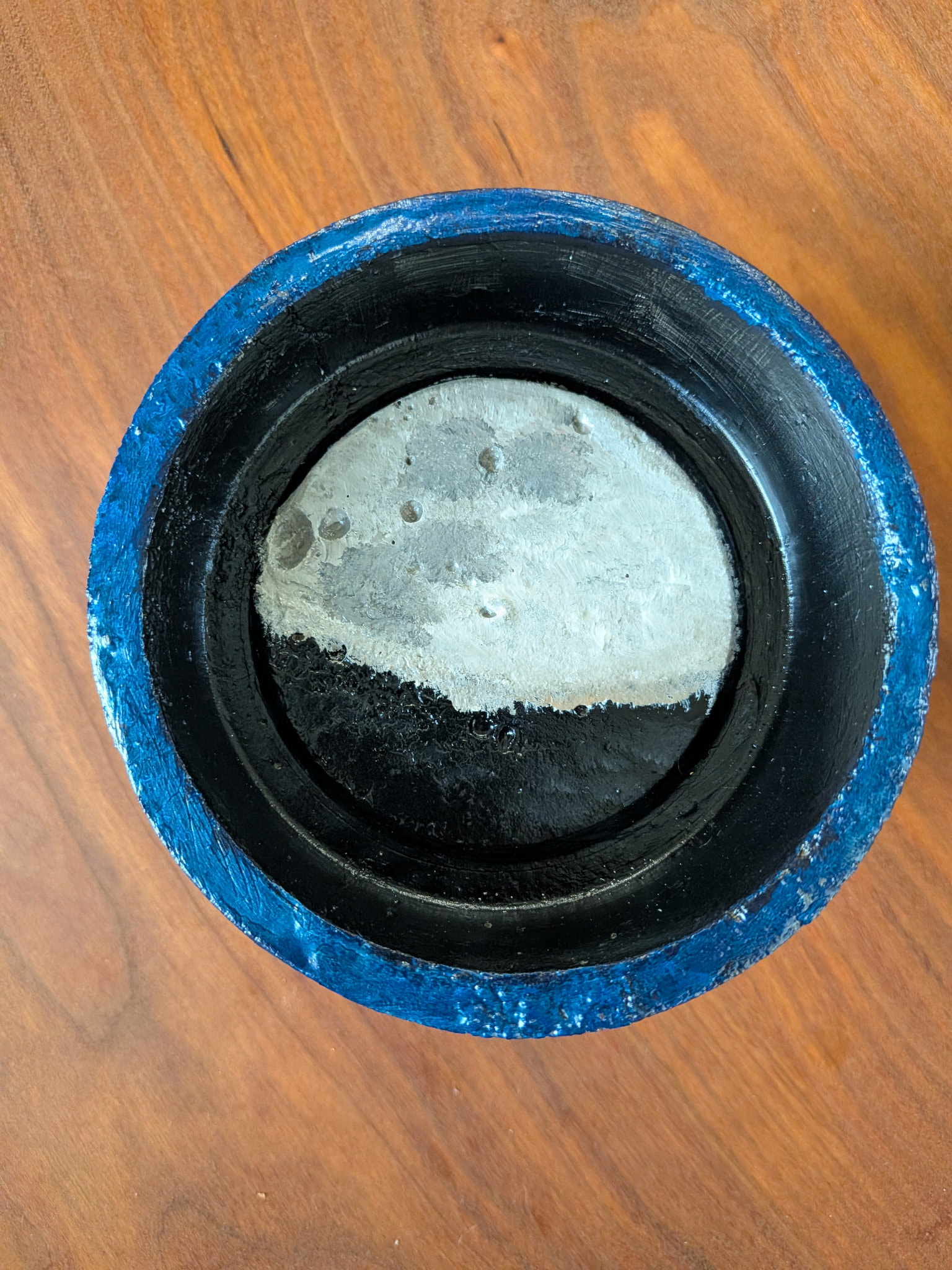
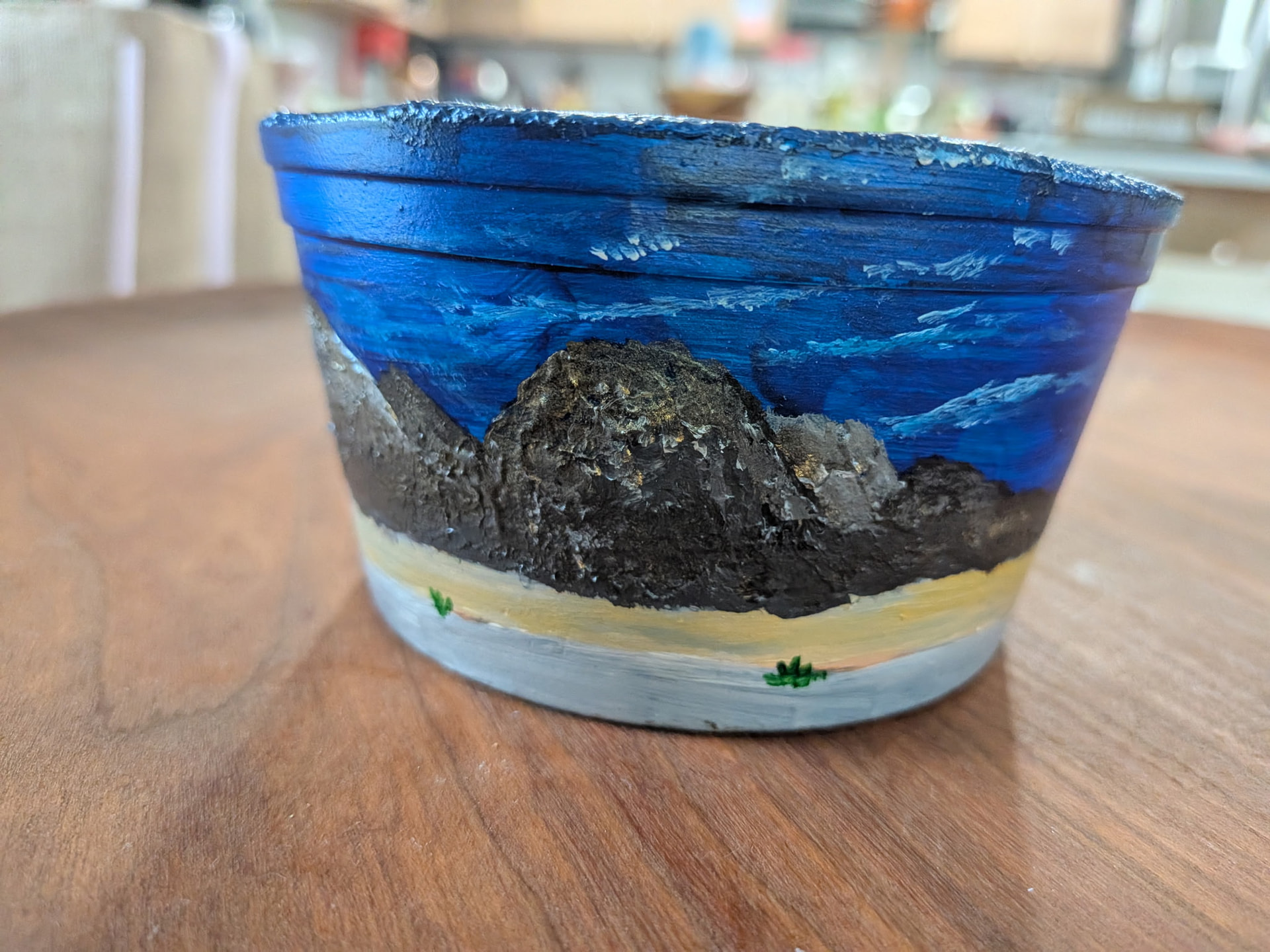
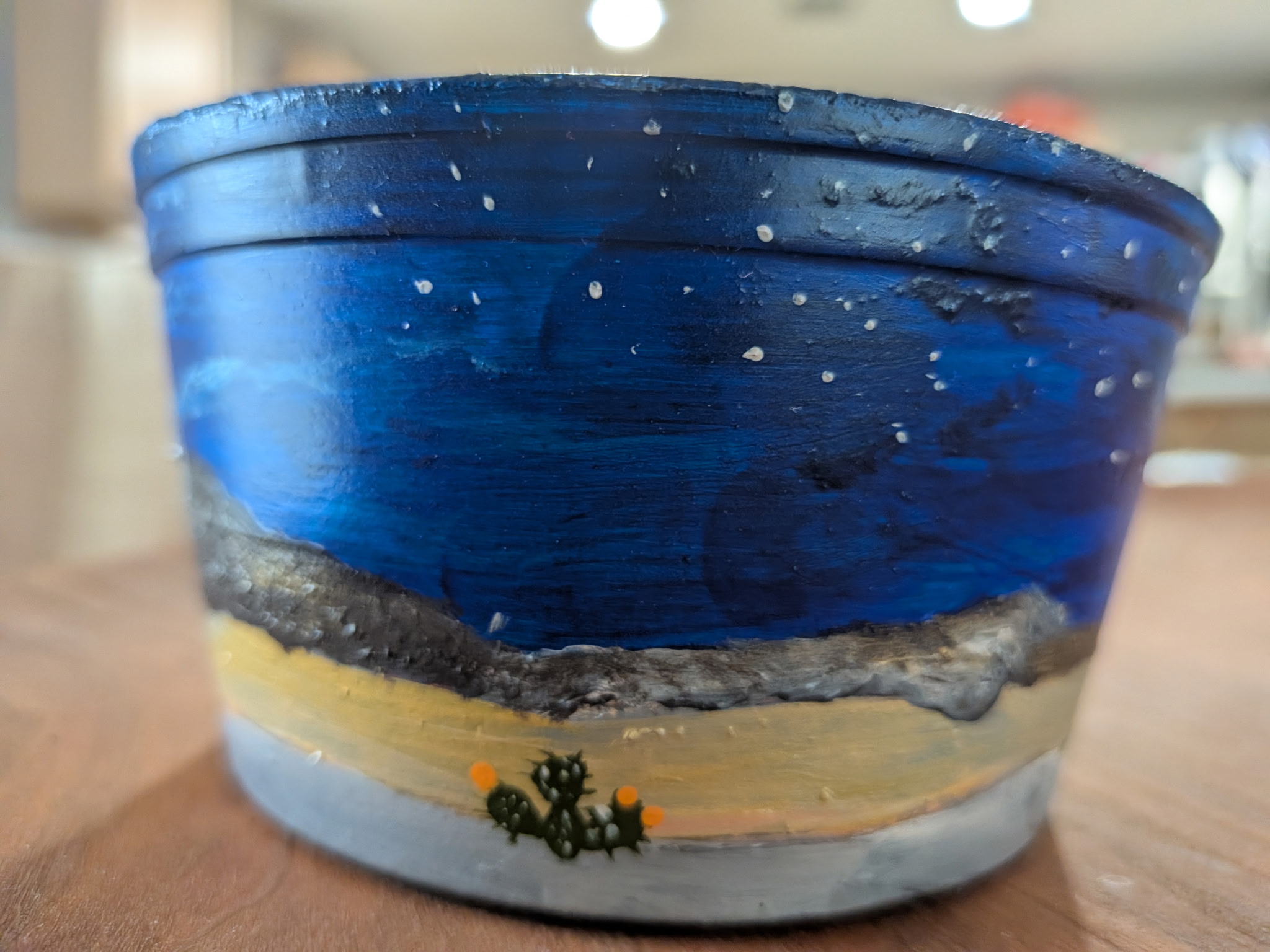
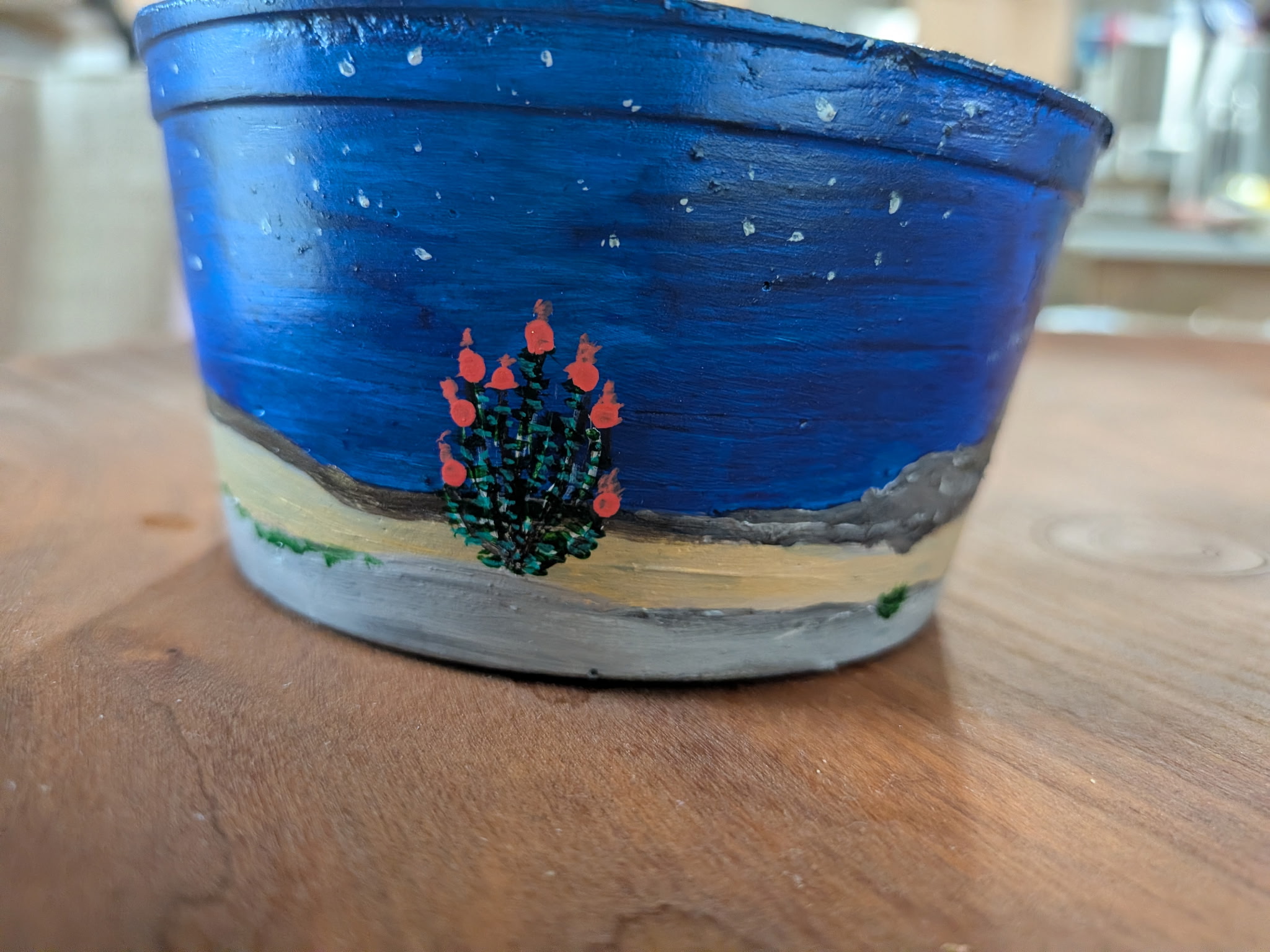
This was the attempt to make a planter for succulents. It ended up being a bit too shallow so it turned into a candle holder. @Duckie painted it after our trip to Big Bend.
Hail yeah! The utility of concrete goes well beyond its stereotypical driveway and building foundation usage. Ferrocement is even used to make boat hulls. Your imagination may be the only limit on its uses.
In the past I’ve messed around with cast concrete while trying to create a parabolic surface to reflect sound waves. By hand, I learned this is laborious messy work and prone to error. Specifically, I want to create an acoustic mirror. You may have seen a ‘whisper dish’ at the science museum or in a park or playground as two parabolic reflectors pointed at each other.
The surface I need to create is an elliptic paraboloid and the maths dictate very specific equations for such a surface. Yuck. No fun!
So my idea is to let physics do the hard part and try spin casting. If you built a machine that is balanced, can support the weight and has very uniform speed the curved surface created should form a parabola. How hard could it be? I bought an axle kit for a go-cart that seems to be a good starting point for such a project. But things are still in the works.
Spin casting sounds fun! I imagine you would need to keep it spinning until set - so using a quick set concrete and a continuous speed seems important?
Have you ever looked at DIY mirror grinding? The telescope community has some setups that produce known curves using only hand-build precision levels.
I’m interested in collaborating with the concrete molds. I’m also interested in the acoustic mirror. Where would it be built? If there’s space, both the concrete molds and acoustic mirror can be larger than life size, which opens up other opportunities for other large creations.
I’d be interested in getting involved! I’ve done some experimental casts with some failed prints from my old work. Had my niece cast her handprints in it. Used off the shelf Quikrete. Worked just fine, but next time would sieve it to remove the larger rocks.
I’m also interested in this. I’d like to experiment with molds/casting in general, I’ve never worked with concrete/cement and have a couple of project ideas that are a natural fit (custom pavers, water features, sculpture). I can offer CAD, and 3d printing support, also very novice laser, and CNC