The folks at Neckog Industries have donated a Flovv reaction injection molding system. This will allow us to cast parts in polyurethane resin that cures in minutes! We can include additives like mica for shine, iron powder for magnetism, or fiber (fiberglass, carbon) for strength.
We’re working on procedures and coming up with a class for how to use this, so stay tuned. If you’re interested (and particularly if you have ideas about what to try), get in touch and we can figure it out together.
Do you know the volume? I couldn’t find it at quick glance. There’s a few parts I would like to make for hydroponics that need cantilevers.
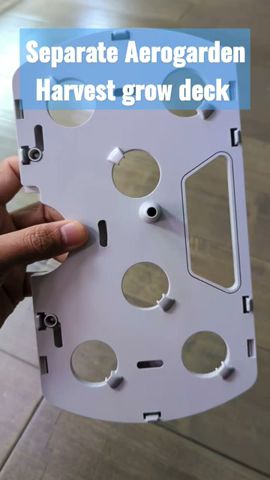
I’m trying to split this stock part into 4ish pieces so that I can remove mature plants from the circle without trimming the roots. Pictured is two parts that sandwich together with cantilevers.
The volume is measured in gallons! They say that the resin bonds cleanly to itself, so you could in theory do even larger volumes by refilling the machine between pours.
Ugh, not even mature plants, a 3-leaf pepper plant has already grown too much to be extracted well. I have two of these things and they are awesome as long as you never look inside
We’re definitely going to experiment with different molding techniques to see what works well with this. I’m not sure if we’ll have an independent mold making class, though. If anyone has enough mold making experience to teach a class, I’d love to collaborate with them!
I can teach a class on, Beggining LVL Mold Making, how to use MoldLab, Flovv first cast, Moldboxer bascis, 1 part molds, 2 part molds, Glove Mold, 3d printed mold preperation, with silicones or platinums. I can go over vaccum chamber usage and reasons I do not have expertise nor the equipment to go over Rotocasting, Advanced level wax sprue placement and venting,
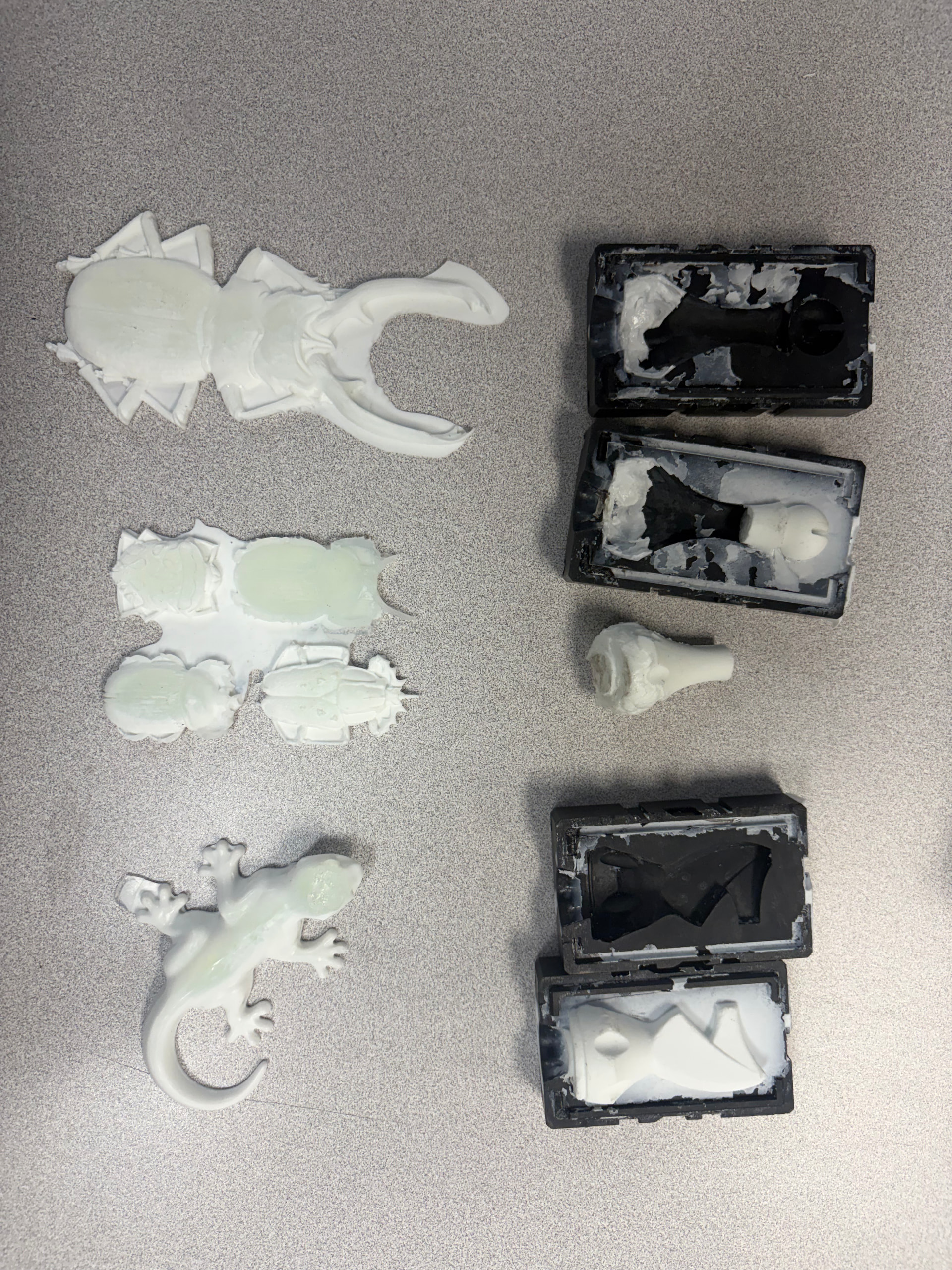
Here are my very first attempts at injection molding. I clearly have lots to learn (like remember to apply mold release ) but for a first try, these are great. The detail on the silicone molds is great, particularly the beetles. I definitely made some wrong guesses about how thin I could make the walls of my resin-printed molds, but this is something that I can work on dialing in.
One of the key strengths of injection molding is being able to quickly produce multiples. ALL of those casts above took a total of 5 minutes of active work (spraying the resin into the molds) and ~10-15 minutes of waiting for them to cure enough to de-mold them. So when I tried to think of some things that had a bunch of multiples, I decided on a chess set. I liked this one: Zonda Chess Set by Rostabig | Download free STL model | Printables.com
I would like to cast them in 3D Printed molds, rather than silicone molds (though you can 3D print a setup to create a silicone mold…), and at first I tried printing them on Zephyrus in ASA (because of the heat released during the molding process), but every print orientation produced either bad overhangs or unsightly layer lines, so resin seems like the best option.
I am experimenting with different resins. The ones above are printed in Sunlu “Tough” resin, but I think I’m going to try SirayaTech’s Flex resin. Particularly the crenelations in the Rook are going to be hard to demold from anything that doesn’t have a bit of give, the Tough resin is slightly flexible, but for this application it’s either too stiff if it’s printed thick or too weak if printed thin. I’m pretty sure that if I’d remembered to use mold release, the Knight and Bishop would have come out great with the Tough. The Flex resin should be delivered tomorrow…
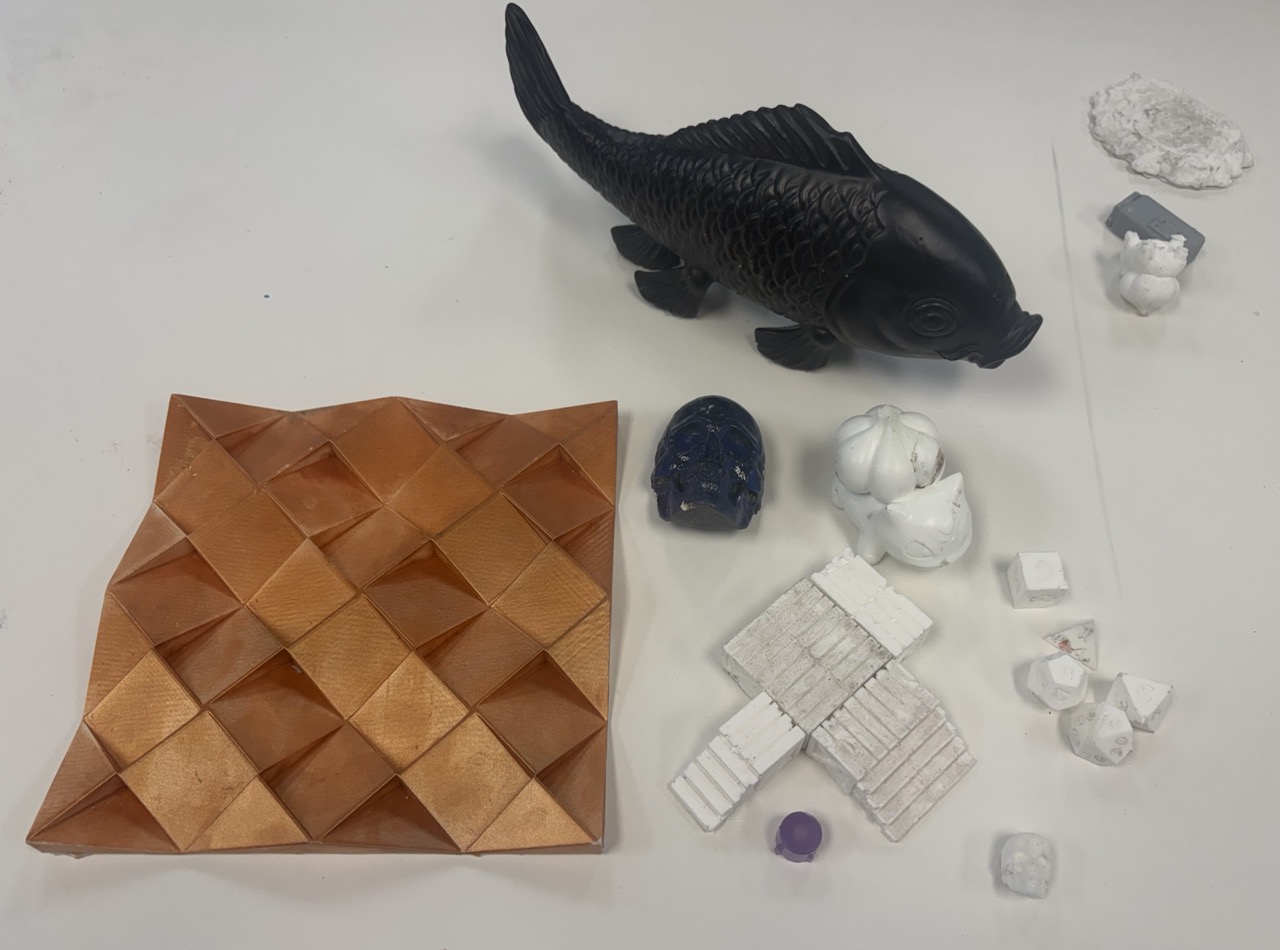
If you want to see what this machine can do, there are some samples in the MPR. These are all from random silicone molds I got cheaply on Amazon, and haven’t been post-processed beyond breaking off a little flash by hand.

 ) but for a first try, these are great. The detail on the silicone molds is great, particularly the beetles. I definitely made some wrong guesses about how thin I could make the walls of my resin-printed molds, but this is something that I can work on dialing in.